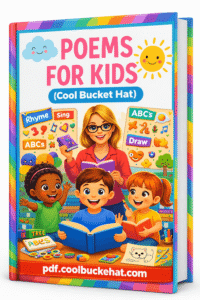
Read and Rhyme Book for Early Readers
Read and Rhyme Book activities are a fun and effective way to help children develop early reading skills. Rhyming words make learning enjoyable because they create rhythm and repetition. When children hear and read rhymes, they improve phonics awareness, pronunciation, and vocabulary.
Rhyming books are especially helpful for beginner readers. The repeated sound patterns make it easier to predict words and build confidence. In this guide, you will learn how a read and rhyme book supports literacy and see sample rhyming stories and activities.
What Is a Read and Rhyme Book?
A Read and Rhyme Book focuses on short stories or poems that use rhyming word patterns.
For example:
cat – hat – bat
sun – fun – run
dog – log – frog
Rhymes help children recognize sound patterns. This improves decoding skills and spelling.
Why Rhyming Is Important
Rhyming supports:
Phonemic awareness
Sound recognition
Vocabulary growth
Reading fluency
Listening skills
When children hear similar ending sounds, they begin to understand how words are built.
Rhyme Story 1: The Cat and the Hat
The cat has a hat.
The hat is flat.
The cat sat on a mat.
The cat likes his hat!
Rhyme Words:
cat – hat – flat – mat – sat
Questions:
Who has a hat?
Where does the cat sit?
Do the words cat and hat rhyme?
Rhyme Story 2: Fun in the Sun
The sun is bright.
It gives us light.
We run and play all day.
We have fun in the sun!
Rhyme Words:
sun – fun – run
Questions:
What is bright?
What do we do in the sun?
Which words rhyme?
Rhyme Story 3: A Big Red Dog
I see a dog.
He sits on a log.
He jumps in the fog.
He is a big red dog!
Rhyme Words:
dog – log – fog
Questions:
Where does the dog sit?
What color is the dog?
Do dog and log rhyme?
Rhyming Word Practice
Match the Rhymes
cat → hat
sun → fun
dog → log
pig → wig
Matching improves sound awareness.
Fill in the Missing Rhyme
The cat sat on a ______. (mat)
We run for ______. (fun)
The dog sat on a ______. (log)
This builds word prediction skills.
Fun Activities for Read and Rhyme Book
To make learning exciting, try these ideas:
1. Rhyme Hunt
Say a word like “cat.”
Ask children to find words that rhyme.
2. Rhyme Sorting
Sort words into rhyme families:
-at family: cat, hat, bat
-og family: dog, log, frog
3. Create Your Own Rhyme
Ask children to write a short rhyme:
The pig is big.
He can dig.
Creativity builds confidence.
Daily Reading Plan
To use a Read and Rhyme Book effectively:
5 minutes – Read one rhyme aloud
5 minutes – Identify rhyming words
5 minutes – Complete a short activity
Short and fun sessions keep children focused.
Benefits of Rhyming Books
Regular rhyming practice helps children:
Improve pronunciation
Recognize sound patterns
Read more fluently
Spell correctly
Enjoy reading more
Rhyming creates rhythm, and rhythm makes reading fun.
Moving to the Next Level
After mastering simple rhymes, children can:
Read longer rhyming stories
Identify rhyming pairs in books
Write their own short rhymes
Learn complex rhyme patterns
Gradual progress keeps learning smooth.
Final Thoughts
A Read and Rhyme Book is a powerful tool for early literacy development. Through fun and simple rhymes, children build phonics skills, improve vocabulary, and grow in confidence.
Keep reading sessions playful and encouraging. When children enjoy rhyming, they develop a lifelong love for reading.