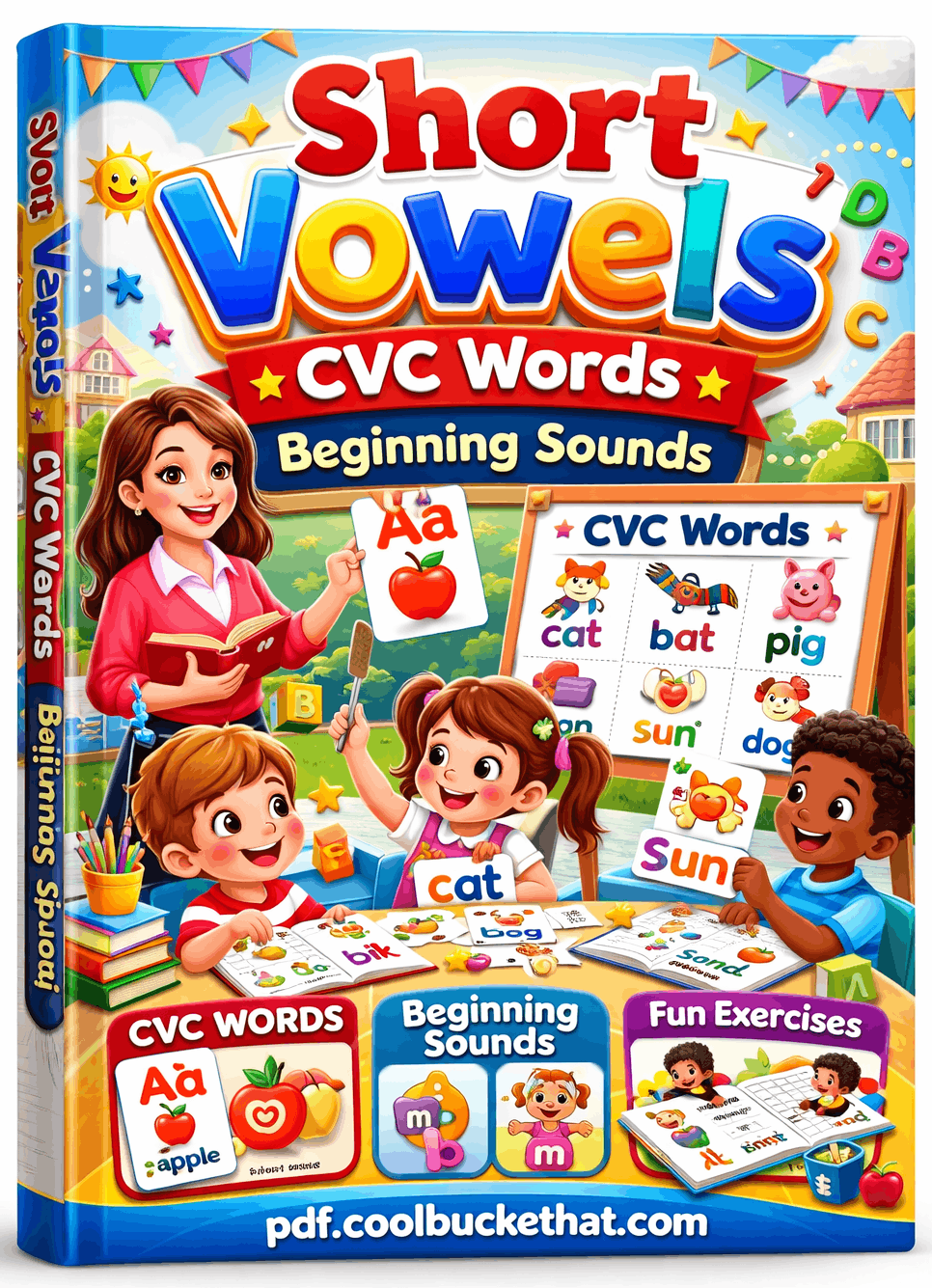
Short Vowels CVC Words Beginning Sounds Guide
Short Vowels CVC Words Beginning Sounds are the foundation of early phonics learning. When children start reading, they must first understand letter sounds. After that, they learn how to blend those sounds into simple words. This is where short vowels and CVC words play a key role.
CVC stands for Consonant-Vowel-Consonant. These three-letter words are easy to decode because each letter makes its own sound. When beginning sounds are mastered, blending becomes smoother. As a result, children gain confidence in reading and spelling.
In this guide, we will explore how short vowels, CVC words, and beginning sounds work together. We will also share effective teaching strategies for parents and teachers.
Understanding Short Vowel Sounds
Short vowels are the basic vowel sounds taught in early phonics instruction. Each vowel has a short sound:
a as in cat
e as in bed
i as in pig
o as in dog
u as in sun
These sounds are clear and consistent. Unlike long vowels, short vowels do not say their name. Because of this, they are easier for beginners to learn first.
Children should practice hearing and identifying these sounds daily. Strong vowel recognition makes blending easier later.
What Are CVC Words?
CVC words follow a simple three-letter pattern:
For example:
Each letter sound is pronounced separately at first. Then the sounds are blended together to form a word.
This predictable structure helps children understand how reading works. Instead of memorizing whole words, they learn to decode.
The Importance of Beginning Sounds
Beginning sounds are the first sounds heard in a word. For example:
The beginning sound in cat is /c/.
The beginning sound in dog is /d/.
The beginning sound in sun is /s/.
Recognizing beginning sounds improves phonemic awareness. It also prepares children for blending full words.
When children can clearly identify the first sound in a word, they build stronger decoding skills. Therefore, beginning sound practice should be included in daily phonics lessons.
How Short Vowels, CVC Words, and Beginning Sounds Work Together
These three elements support each other during early reading instruction.
First, children learn individual consonant and vowel sounds. Next, they practice identifying beginning sounds. Then, they blend short vowel CVC words.
For example:
Recognize the beginning sound /c/.
Identify the short vowel sound /a/.
Add the ending sound /t/.
Blend together: cat.
This step-by-step process builds reading confidence.
Effective Teaching Strategies
Teaching phonics should be clear and structured. Passive voice should be limited. Direct and simple explanations work best.
1. Teach Letter Sounds First
Ensure children know individual consonant and vowel sounds before blending. Practice daily for better retention.
2. Practice Beginning Sounds With Pictures
Show a picture of a dog. Ask, “What sound does dog start with?” Encourage children to say /d/.
3. Introduce CVC Words Gradually
Start with one vowel group at a time. For example, begin with short “a” words like cat, bat, and hat.
4. Blend Slowly and Clearly
Say each sound separately. Then blend smoothly. For example: /b/ /e/ /d/ becomes bed.
Repetition strengthens memory. However, sessions should remain short to maintain focus.
Fun Activities for Practice
Children learn best when lessons are interactive. Here are simple and engaging activities:
Beginning Sound Sorting
Provide picture cards. Ask children to sort them by beginning sound. For example, group pictures that start with /m/.
CVC Word Matching
Match CVC words with correct pictures. This strengthens both decoding and comprehension.
Fill in the Missing Letter
Write c _ t. Ask children to choose the correct vowel.
Sound Tapping
Children tap their fingers for each sound in a word. For example, tap three times for /d/ /o/ /g/.
Word Family Practice
Introduce word families like -at (cat, bat, hat). Pattern recognition improves fluency.
These activities keep learning enjoyable and productive.
Classroom Strategies for Teachers
Teachers can incorporate short vowels and beginning sounds into daily literacy blocks.
Small Group Instruction
Divide students based on skill level. Provide targeted practice where needed.
Literacy Centers
Create phonics stations with worksheets and games. Students rotate between activities.
Quick Assessments
Use short exercises to check understanding. Immediate feedback helps correct mistakes early.
Structured lessons save preparation time and improve learning outcomes.
Supporting Learning at Home
Parents can reinforce phonics skills easily at home.
Read simple CVC books together.
Practice saying beginning sounds aloud.
Create a weekly word list.
Play rhyming games during daily routines.
Short daily sessions of 10–15 minutes are enough. Consistency matters more than duration.
Encouragement builds confidence. Celebrate small improvements.
Common Challenges and Solutions
Some children may struggle at first. However, challenges can be addressed with patience.
Confusing Vowel Sounds
Teach one vowel at a time. Provide extra practice with picture support.
Difficulty Identifying Beginning Sounds
Emphasize listening skills. Slowly pronounce words and stretch the first sound.
Trouble Blending
Use visual cues such as sliding a finger under letters while blending.
Improvement may take time. Regular practice leads to steady progress.
Expanding Beyond Basic CVC Words
Once short vowels and beginning sounds are mastered, children can move to:
Ending sounds practice
Blends (stop, clap)
Digraphs (ship, chat)
Long vowel words
Gradual progression ensures children do not feel overwhelmed.
Long-Term Benefits of Strong Phonics Skills
Early mastery of short vowels and beginning sounds leads to:
Children who understand phonics patterns read more independently. They also develop a positive attitude toward learning.
Creating a Positive Learning Environment
A quiet and supportive environment helps children focus. Clear instructions should be given step by step.
Use transition words like “first,” “next,” and “finally” to guide lessons. Keep sentences short and direct.
Praise effort regularly. Positive reinforcement motivates children to keep trying.
Final Thoughts
Short Vowels CVC Words Beginning Sounds are essential building blocks for early readers. These foundational skills teach children how letters and sounds work together. Through consistent practice, blending becomes easier and reading confidence grows.
Whether at home or in the classroom, structured phonics instruction creates lasting results. With patience, encouragement, and daily practice, young learners can develop strong reading skills that support lifelong success.