Phonics Word Family: A Simple Guide for Early Readers
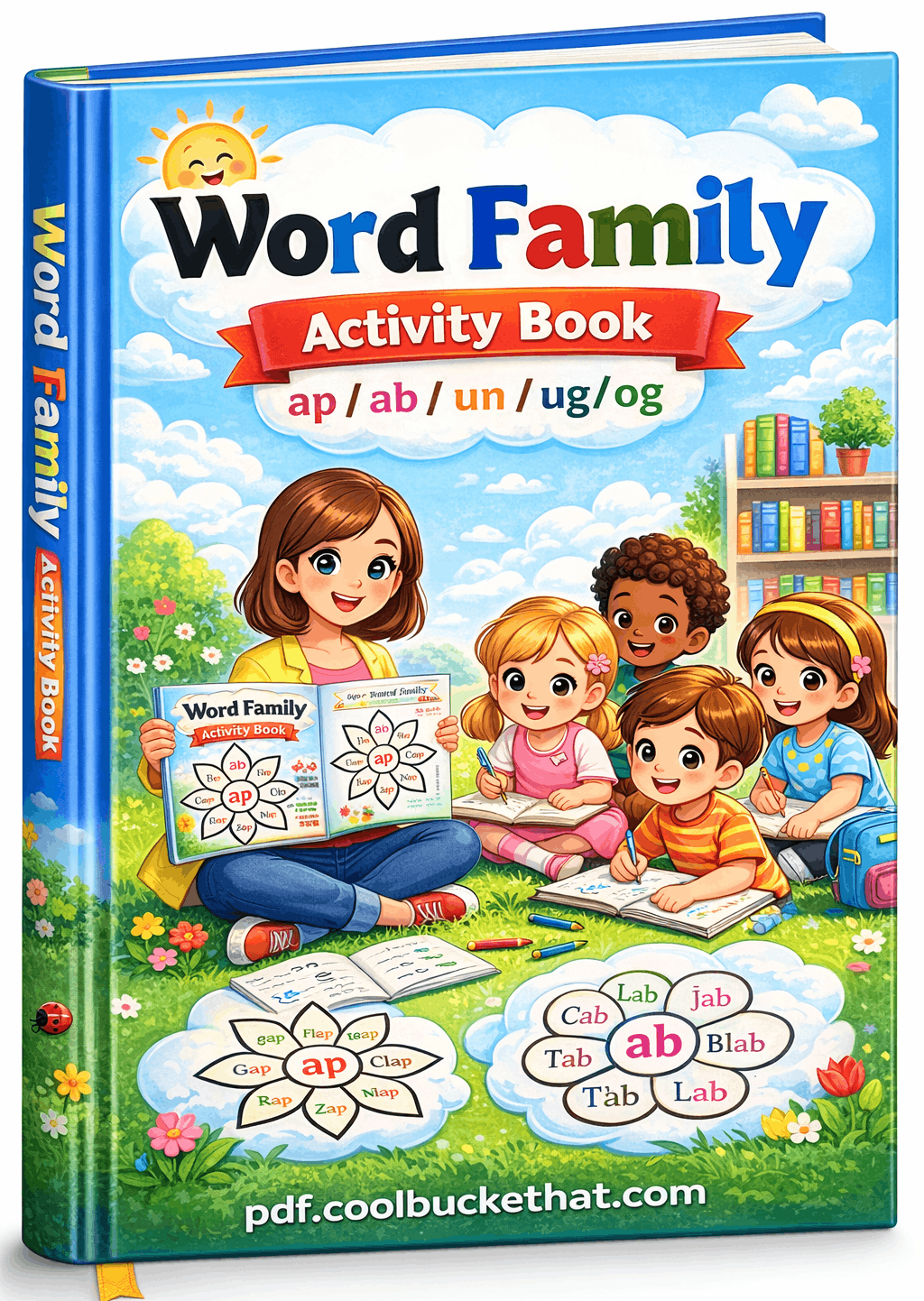
Phonics Word Family learning is one of the easiest and most effective ways to teach children how to read. Word families help children recognize patterns in words. When kids learn one word, they can quickly read many similar words. As a result, reading becomes faster and more confident.
In this guide, you will learn what word families are, why they are important, and fun activities to practice them at home or in the classroom.
What Is a Phonics Word Family?
A word family is a group of words that share the same ending sound or pattern. Only the first letter changes.
For example:
-at family
All these words end with -at. Children learn the pattern and apply it to new words.
Why Word Families Are Important
Teaching phonics word families helps children:
Instead of memorizing many separate words, children learn patterns.
Common Phonics Word Families
Here are some common beginner word families:
-at Family
cat
bat
hat
mat
rat
-an Family
man
can
fan
pan
ran
-ig Family
pig
big
dig
wig
fig
-op Family
hop
top
pop
mop
cop
-ug Family
bug
hug
rug
mug
jug
Practicing these families builds strong phonics skills.
Fun Phonics Word Family Activities
1. Word Building Game
Write the ending (-at) on paper. Change the first letter:
c-at
b-at
h-at
m-at
This helps children see patterns clearly.
2. Fill in the Missing Letter
c _ t
b _ t
h _ t
m _ t
Children fill in the beginning letter.
3. Word Family Sort
Mix words from different families. Ask children to sort them into groups.
Example words:
cat, pig, hat, big, mat, dig
Sort into:
-at family
-ig family
4. Read a Short Story
Here is a short word family story:
The cat sat on a mat.
The rat ran to the mat.
The cat and rat sat together.
Ask simple questions:
Who sat on the mat?
Who ran?
Short stories reinforce learning.
5. Word Family Chart
Create a chart like this:
| -at | -an | -ig |
|---|
| cat | man | pig |
| hat | fan | big |
| bat | pan | dig |
Charts make patterns easy to see.
Tips for Parents and Teachers
Short practice sessions build steady progress.
Moving Beyond Basic Word Families
Once children master simple CVC families, introduce:
Example:
-ake family
cake
lake
make
take
This expands reading skills gradually.
Benefits of Mastering Word Families
Children who understand phonics word families:
Pattern recognition is key to strong reading development.
Final Thoughts
Phonics Word Family learning is a powerful and simple way to teach reading. By focusing on patterns like -at, -an, and -ig, children can quickly build decoding skills.
Keep lessons short. Make learning fun. Practice consistently.
With daily repetition and encouragement, young learners will become confident readers—one word family at a time.