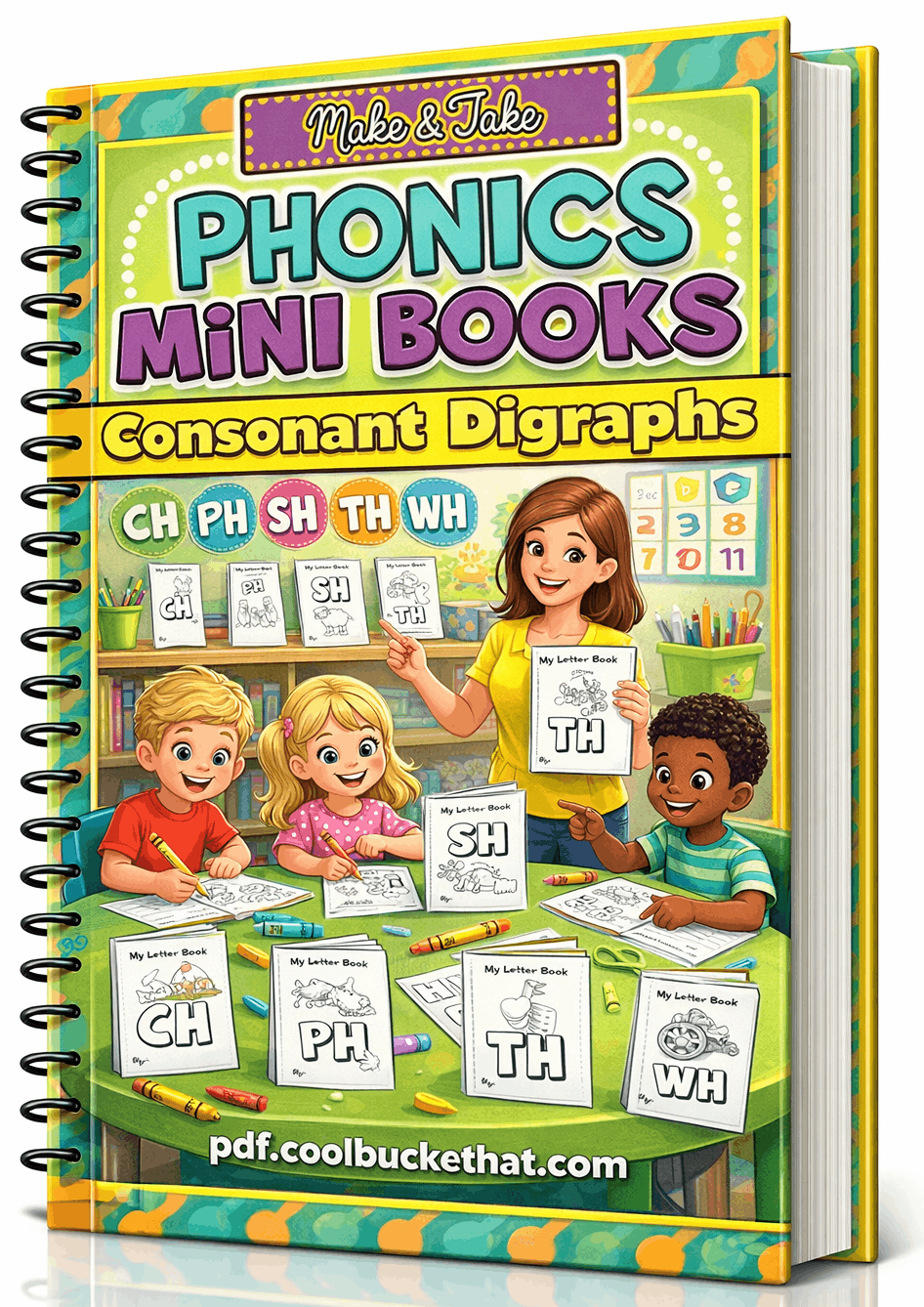
Phonics Mini Books Consonant Digraphs for Early Readers
Phonics Mini Books Consonant Digraphs are excellent tools for helping children master important sound patterns in English. Consonant digraphs are two letters that work together to make one sound. When children learn these sounds through short, simple mini books, reading becomes easier and more enjoyable.
In this guide, you will learn what consonant digraphs are, why mini books are effective, and find short sample stories for practice.
What Are Consonant Digraphs?
A consonant digraph is made of two consonants that create one sound.
Common consonant digraphs include:
sh (ship, shop)
ch (chat, chin)
th (thin, that)
wh (whale, wheel)
ph (phone, photo)
For example:
s + h = sh → ship
c + h = ch → chair
Children must learn to recognize these as single sounds, not separate letters.
Why Use Phonics Mini Books?
Mini books are small, simple reading booklets focused on one sound pattern. They are helpful because:
They provide focused practice
They use repetition for learning
They build reading confidence
They are easy to complete in one sitting
Short books reduce frustration and encourage success.
Mini Book 1: “The Ship” (sh sound)
The ship is big.
The ship is on the sea.
A fish jumps near the ship.
The ship sails fast.
Comprehension Questions:
Where is the ship?
What jumps near the ship?
Mini Book 2: “Chat with a Chick” (ch sound)
A chick sits on a chair.
The chick has a chip.
The chick and I chat.
The chick is happy.
Questions:
Where does the chick sit?
What does the chick have?
Mini Book 3: “The Thin Path” (th sound)
The thin path is long.
The path is near the tree.
I walk on the thin path.
The path is safe.
Questions:
What is thin?
Where is the path?
Mini Book 4: “The White Whale” (wh sound)
The white whale swims fast.
The whale jumps in the water.
The whale makes a splash.
The whale is big.
Questions:
What color is the whale?
What does the whale do?
Mini Book 5: “The Phone Call” (ph sound)
I pick up the phone.
The phone rings.
My friend calls me.
We laugh and talk.
Questions:
What rings?
Who calls?
Digraph Practice Activities
After reading, reinforce learning with activities.
1. Circle the Digraph
Find and circle the digraph in each word:
ship
chair
thin
whale
phone
2. Fill in the Missing Digraph
_ip (sh)
_air (ch)
_in (th)
_ale (wh)
_one (ph)
3. Word Sorting
Sort the words into groups:
sh: ship, shop, fish
ch: chat, chair, cheese
th: thin, that, three
Sorting builds recognition skills.
Tips for Parents and Teachers
Focus on one digraph at a time
Practice daily for 10–15 minutes
Encourage rereading for fluency
Use flashcards for extra practice
Praise progress
Short and consistent practice works best.
Benefits of Consonant Digraph Mastery
Children who understand digraphs can:
Digraph knowledge helps children move beyond simple CVC words.
Final Thoughts
Phonics Mini Books Consonant Digraphs provide structured, engaging practice for developing readers. Short stories focused on specific sound patterns make learning simple and effective.
Keep reading sessions short. Make learning fun. Celebrate improvement.
With regular practice and encouragement, children will master consonant digraphs and become stronger, more confident readers.