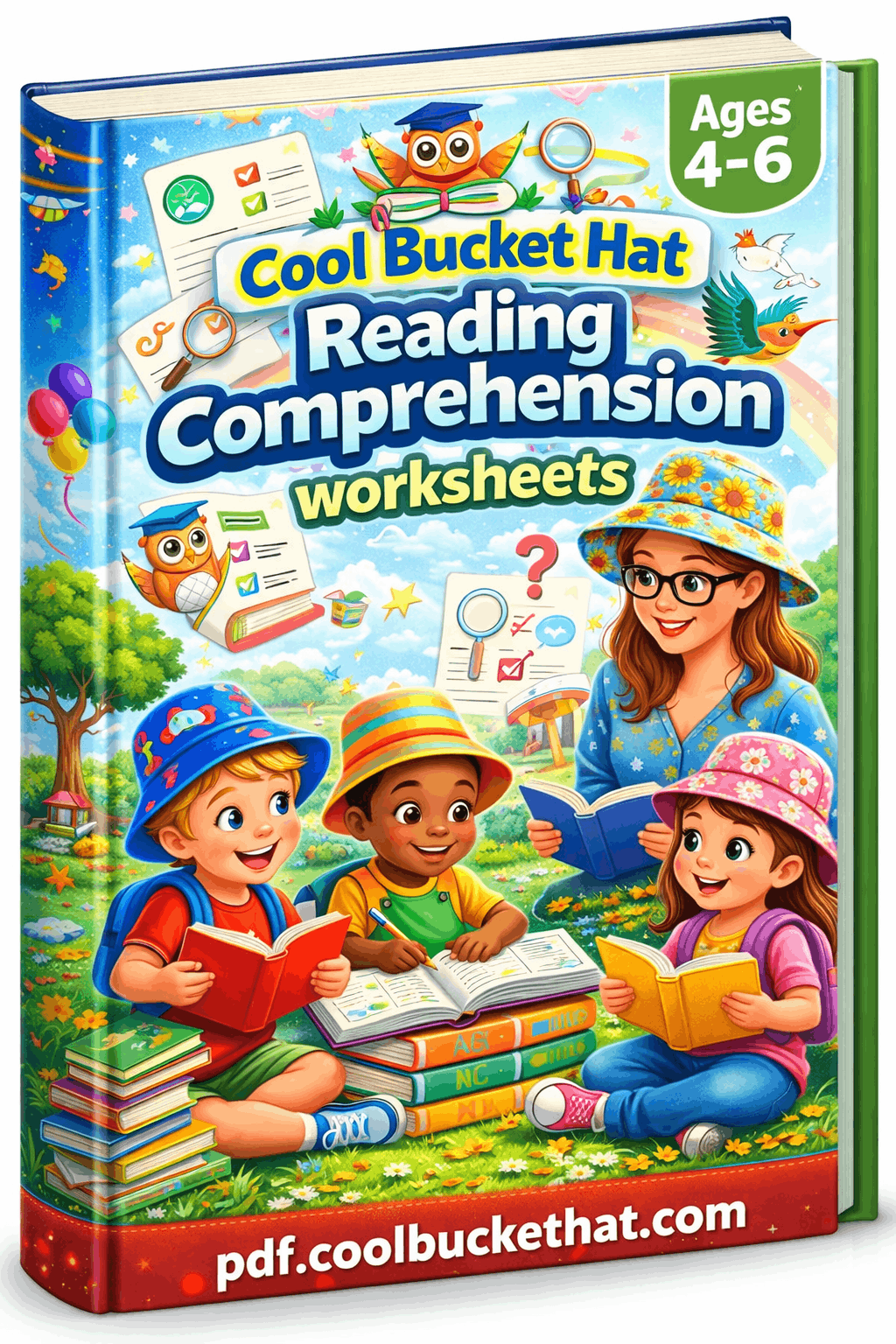
Reading Comprehension Worksheets Age 4-6 Guide
Reading Comprehension Worksheets Age 4-6 are essential tools for building early literacy skills. At this stage, children are learning to recognize letters, blend sounds, and understand simple sentences. Therefore, worksheets must be clear, engaging, and developmentally appropriate.
In this guide, you will discover why comprehension worksheets matter, what skills they develop, and sample worksheet ideas you can use at home or in the classroom. The content is easy to follow and practical for parents and teachers.
Why Reading Comprehension Is Important at Age 4–6
Between the ages of 4 and 6, children begin to connect words with meaning. They move from simply recognizing letters to understanding short texts. This stage builds the foundation for future academic success.
Reading comprehension worksheets help children:
Because early learners have short attention spans, activities must be short and interactive.
Skills Developed Through Worksheets
Well-designed Reading Comprehension Worksheets Age 4-6 focus on specific early literacy skills.
1. Listening Comprehension
At age 4, many children cannot read independently. Worksheets often include a short story that is read aloud by a parent or teacher. Then, children answer simple questions.
2. Picture Recognition
Children look at pictures and match them to sentences. This strengthens understanding.
3. Simple Question Answering
Questions like:
Who is in the story?
What color is the ball?
Where is the cat?
These questions build thinking skills.
4. Sequencing
Children arrange pictures in order. This teaches beginning, middle, and end structure.
Sample Reading Passage and Worksheet
Here is an example suitable for ages 4–6.
Short Story
Tom has a red ball.
Tom can run.
Tom runs to the park.
He plays with the ball.
Tom is happy.
Worksheet Questions
What color is Tom’s ball?
Where does Tom go?
Is Tom happy or sad?
Circle the word “ball.”
Draw Tom at the park.
These simple activities test understanding without overwhelming the child.
Types of Worksheets for Ages 4–6
Variety keeps learning interesting. Here are common worksheet types.
1. Picture and Sentence Match
Children draw a line from the sentence to the correct picture.
Example sentence:
“The cat is on the mat.”
2. Yes or No Questions
After reading a short story, children answer:
This strengthens logical thinking.
3. Fill in the Missing Word
Example:
“The cat is ___ the mat.”
Options: on / in / up
This builds vocabulary and comprehension.
4. Color the Correct Answer
Children color the picture that matches the story. This works especially well for younger learners.
How to Use Worksheets at Home
Parents do not need long study sessions. Ten to fifteen minutes is enough.
Step 1: Read the Story Slowly
Read clearly and point to the words if the child is beginning to read.
Step 2: Ask Simple Questions
Pause and ask questions to check understanding.
Step 3: Complete the Worksheet Together
Offer guidance but let the child think independently.
Step 4: Praise Effort
Encouragement builds confidence.
Classroom Strategies for Teachers
Teachers can use Reading Comprehension Worksheets Age 4-6 in many structured ways.
Small Group Work
Divide students into small groups. Read a story together and complete worksheets.
Literacy Centers
Place worksheets in a reading corner. Rotate students through centers.
Interactive Board Practice
Display a worksheet on a smart board. Solve it as a class.
Making Worksheets Engaging
Young children learn best through fun and color. Here are some ideas:
Use bright illustrations
Add stickers for correct answers
Include simple coloring tasks
Combine reading with drawing
When worksheets feel playful, children stay motivated.
Common Challenges and Solutions
Some children may struggle with comprehension at this age. That is normal.
Short Attention Span
Keep sessions brief. Break activities into small steps.
Limited Vocabulary
Explain new words using pictures or simple examples.
Difficulty Sitting Still
Add movement breaks between tasks.
Tracking Progress
You can monitor development by observing:
Ability to answer questions correctly
Increased vocabulary use
Better sentence understanding
Improved listening skills
Small improvements over time show growth.
Transitioning to Higher Levels
Once children master simple comprehension tasks, worksheets can gradually include:
However, strong early foundations are key.
Final Thoughts
Reading Comprehension Worksheets Age 4-6 play a vital role in early literacy development. They help children move from recognizing words to understanding meaning. Simple stories, clear questions, and interactive activities create strong learning experiences.
Keep lessons short. Stay positive. Make reading fun.
With regular practice and encouragement, children develop the confidence and skills they need for lifelong reading success.