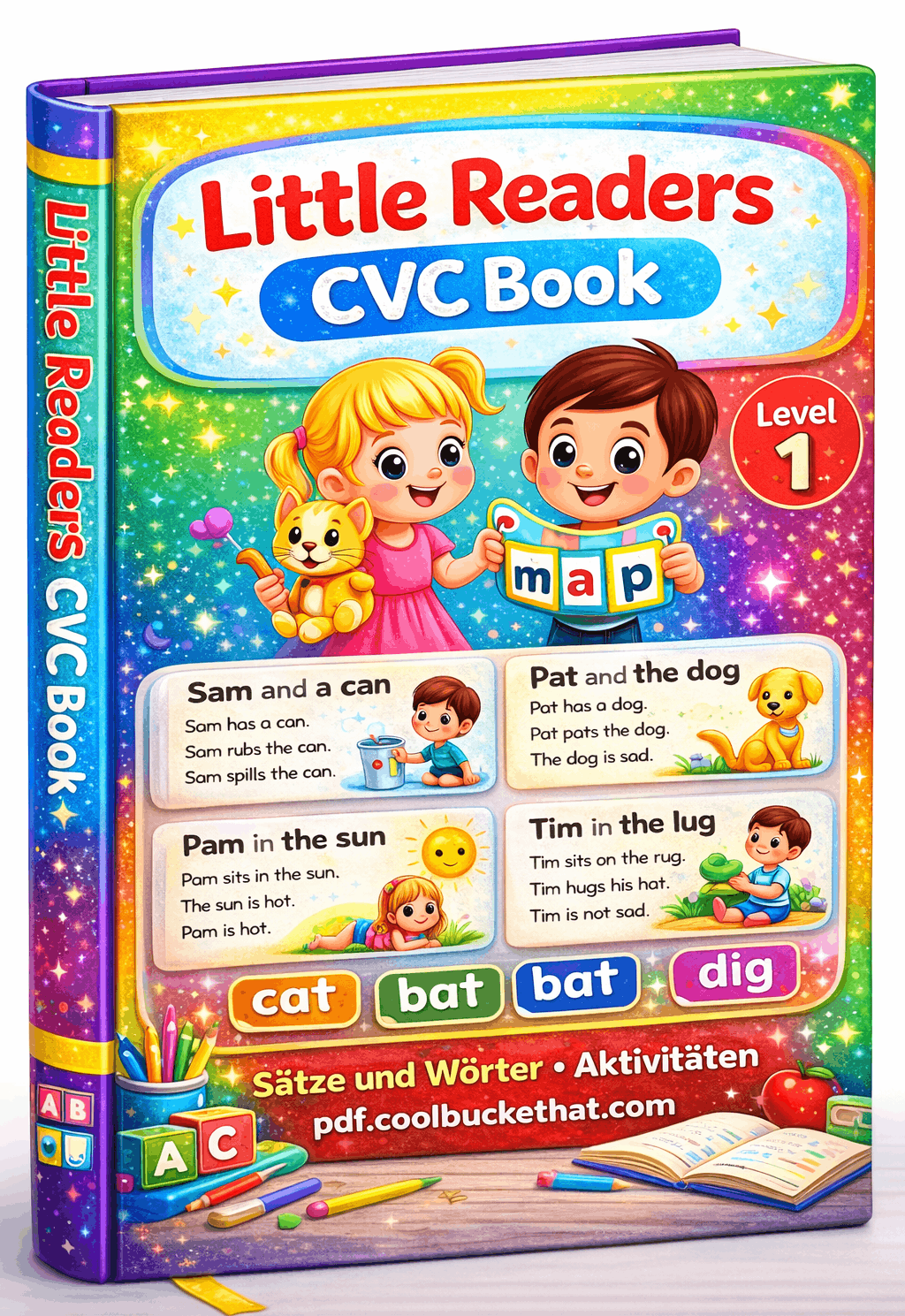
Little Readers CVC Book for Early Phonics Skills
Little Readers CVC Book is a powerful tool for helping young children build strong reading foundations. When children begin their literacy journey, simple and structured materials are needed. CVC books are designed exactly for that purpose. They focus on short, clear words that follow a consonant-vowel-consonant pattern. Because of this structure, early readers can decode words with confidence.
In this article, you will learn what a CVC book is, why it is important, how it supports phonics development, and how parents and teachers can use it effectively. The content is written in a simple and friendly style so it can be easily understood and applied.
What Is a CVC Book?
CVC stands for consonant-vowel-consonant. These are short three-letter words such as:
A CVC book includes stories built around these simple word patterns. The sentences are short. The vocabulary is controlled. The repetition is intentional. As a result, young readers can focus on blending sounds instead of guessing words.
A Little Readers CVC Book is typically created for preschoolers, kindergarteners, and early first-grade students. It supports children who are learning letter sounds and beginning to read independently.
Why CVC Words Are Important in Early Reading
Learning to read can feel overwhelming for children. However, CVC words make the process manageable. They introduce structure and predictability.
1. Easy Sound Blending
Children learn to blend sounds step by step. For example:
/c/ + /a/ + /t/ = cat
This clear pattern builds decoding skills. Because the structure does not change, confidence grows quickly.
2. Strong Phonics Foundation
Phonics instruction focuses on the relationship between letters and sounds. CVC words are perfect for early phonics lessons. The rules are simple, and exceptions are rare.
3. Encourages Independent Reading
When children can read full sentences on their own, motivation increases. Small successes lead to bigger progress.
Features of a Quality Little Readers CVC Book
Not all beginner books are equally effective. A good CVC book includes specific features that support learning.
Simple Sentence Structure
Sentences are short and clear. For example:
The cat is big.
The dog can run.
This helps children focus on decoding rather than complex grammar.
Repetition of Words
Repetition reinforces memory. If a word appears multiple times, it becomes familiar. As a result, fluency improves naturally.
Engaging Illustrations
Pictures support comprehension. When a child reads “The cat is on the mat,” the illustration confirms understanding.
Gradual Progression
Words should increase in difficulty slowly. First, short vowel sounds are introduced. Later, slightly longer sentences may appear.
How to Use a CVC Book at Home
Parents play an important role in early literacy. Fortunately, using a CVC book at home is simple.
Read Together First
Begin by reading the book aloud. Point to each word. Let your child hear correct pronunciation.
Practice Sounding Out Words
Next, encourage your child to blend sounds. Be patient. Allow time for thinking.
Praise Effort, Not Perfection
Confidence matters more than speed. Celebrate small achievements. Positive reinforcement builds motivation.
Repeat Regularly
Daily practice works best. Even ten minutes a day can make a difference.
Classroom Benefits of CVC Books
Teachers often use CVC books during guided reading sessions. These books fit perfectly into structured literacy programs.
Small Group Reading
Students with similar reading levels can practice together. This creates a supportive environment.
Phonics Reinforcement
After a phonics lesson, a related CVC story can be read. This connects theory with practice.
Assessment Tool
Teachers can observe decoding skills during reading time. Strengths and weaknesses are easily identified.
Building Fluency and Confidence
Fluency develops through practice. A Little Readers CVC Book allows repeated reading without frustration. Because the vocabulary is controlled, children experience success.
Fluent reading includes:
These skills are developed gradually. Over time, reading becomes automatic.
Supporting Different Learning Styles
Every child learns differently. Fortunately, CVC books can be adapted to various styles.
Visual Learners
Bright illustrations help connect words with images.
Auditory Learners
Reading aloud strengthens sound recognition.
Kinesthetic Learners
Children can trace letters while saying sounds. This reinforces memory through movement.
Common Challenges and Solutions
Although CVC books are simple, some challenges may appear.
Confusing Letter Sounds
Letters like “b” and “d” may be mixed up. Gentle correction and repeated practice can solve this issue.
Guessing Instead of Decoding
Some children look at pictures and guess words. Encourage sounding out each letter.
Short Attention Span
Keep sessions brief and fun. Use praise and small rewards when needed.
Choosing the Right CVC Book
When selecting a Little Readers CVC Book, consider the following factors:
Age appropriateness
Clear font size
Simple vocabulary
Positive themes
Books with relatable characters often keep children interested. Stories about animals, family, or school life are usually effective.
The Role of Short Vowel Sounds
Short vowels are the focus of most CVC books. These include:
Short a (cat, hat, map)
Short e (pen, bed, red)
Short i (sit, pig, lip)
Short o (dog, hop, log)
Short u (sun, bug, cup)
Mastering these sounds prepares children for more complex reading patterns later.
Transitioning Beyond CVC Words
CVC books are only the beginning. Once children are comfortable, new patterns can be introduced.
For example:
However, a strong CVC foundation makes these transitions smoother.
Making Reading Fun and Engaging
Reading should not feel like a chore. It should feel like discovery.
Here are simple ways to add excitement:
Use funny voices for characters.
Act out short scenes.
Let children choose the book.
Create simple comprehension questions.
When reading becomes enjoyable, children develop a lifelong love of books.
Digital vs. Printed CVC Books
Today, both printed and digital versions are available. Each has benefits.
Printed books allow children to turn pages and physically engage. Digital books may include interactive features such as audio support.
Balance is important. Screen time should be managed carefully, especially for younger learners.
Long-Term Impact on Literacy
Early reading skills influence academic success. Studies show that children who read confidently in early grades perform better later.
A structured resource like a CVC book builds:
Word recognition
Spelling skills
Reading comprehension
Writing confidence
These skills are interconnected. When reading improves, overall language ability grows.
Final Thoughts
Little Readers CVC Book is more than just a beginner reading tool. It is a stepping stone toward lifelong literacy. By focusing on simple sound patterns, it removes fear from the reading process. Confidence is built one word at a time.
Parents and teachers should provide consistent practice and encouragement. With patience and repetition, children begin to read independently. Over time, simple three-letter words turn into full sentences and rich stories.
Early success shapes a child’s attitude toward learning. Therefore, choosing the right reading materials matters. A well-designed CVC book can open the door to a world of imagination, knowledge, and growth.
Reading starts small. Yet its impact lasts forever.