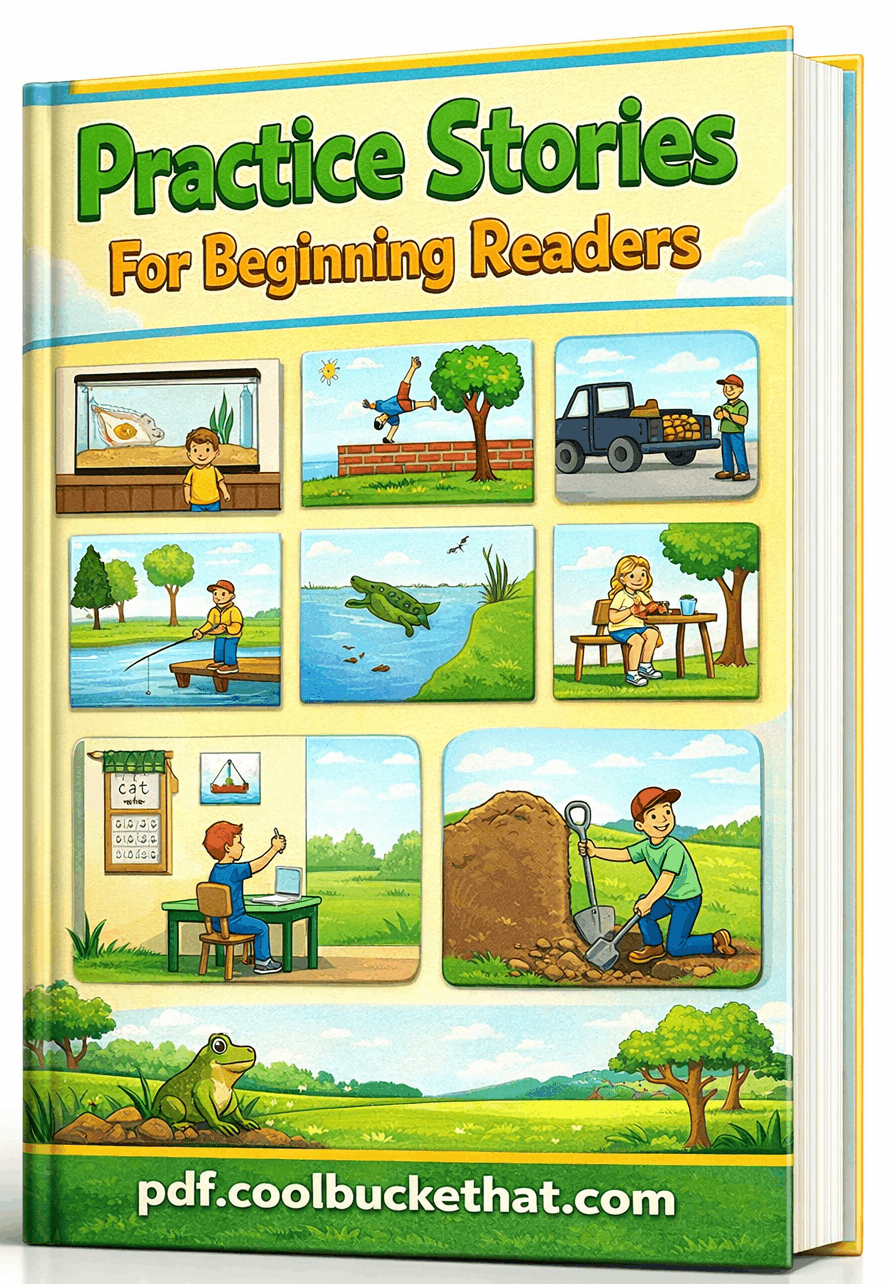
Practice Stories For Beginning Readers at Home
Practice Stories For Beginning Readers help young learners build confidence, improve fluency, and understand simple sentence structures. When children read short and easy stories, they feel successful. As a result, they enjoy reading more and practice regularly.
Beginning readers need clear vocabulary, short sentences, and repeated words. Long or complex stories can feel overwhelming. However, simple practice stories make learning smooth and enjoyable. In this guide, you will find helpful tips and short sample stories for early readers.
Why Practice Stories Are Important
Practice stories help children:
Repetition is very important at this stage. When children see the same words again and again, they remember them easily.
What Makes a Good Beginner Story?
A strong story for early readers should include:
For example:
“The cat is big.
The cat is black.
The cat can run.”
Short sentences make reading easier.
Practice Story 1: The Big Dog
Ben has a big dog.
The dog is brown.
The dog can run fast.
Ben plays with the dog.
Ben and the dog are happy.
Questions:
Who has a dog?
What color is the dog?
How do they feel?
Practice Story 2: A Red Hat
Sam has a red hat.
The hat is on his head.
Sam runs in the sun.
The red hat is big.
Sam likes his hat.
Questions:
What color is the hat?
Where is the hat?
Does Sam like his hat?
Practice Story 3: At the Park
Lily goes to the park.
She sees a swing.
She sees a slide.
Lily plays on the swing.
Lily has fun.
Questions:
Where does Lily go?
What does she see?
Is Lily happy?
Practice Story 4: My Cat
I have a cat.
My cat is small.
My cat is white.
The cat can jump.
I love my cat.
Questions:
What animal is in the story?
What color is the cat?
Can the cat jump?
Practice Story 5: Tim and the Ball
Tim has a ball.
The ball is blue.
Tim throws the ball.
The ball rolls fast.
Tim runs after the ball.
Questions:
What does Tim have?
What color is the ball?
What does Tim do?
How to Use Practice Stories Effectively
To get the best results from Practice Stories For Beginning Readers, follow these steps:
Step 1: Read Together
Read the story aloud first. Let the child listen carefully.
Step 2: Read Again
Ask the child to read with you.
Step 3: Read Alone
Encourage the child to read independently.
Step 4: Ask Questions
Simple questions improve understanding.
Daily Reading Routine for Beginners
Consistency is key. A short daily routine works best.
10–15 Minute Plan:
5 minutes: Review sight words
5 minutes: Read one short story
5 minutes: Answer questions and discuss
Small daily practice builds strong reading habits.
Tips for Parents and Teachers
Choose stories with simple words.
Praise effort, not only accuracy.
Repeat favorite stories often.
Use pictures to explain meaning.
Keep reading time fun and relaxed.
Confidence grows when children feel supported.
Moving to the Next Level
After mastering short stories, children can try:
Gradual progress prevents frustration.
Final Thoughts
Practice Stories For Beginning Readers provide a strong foundation for lifelong reading success. Short sentences, repeated vocabulary, and simple storylines help children improve fluency and comprehension.
Keep stories easy, fun, and positive. With regular practice and encouragement, beginning readers will grow into confident and independent learners.
Reading should always feel like a joyful adventure.