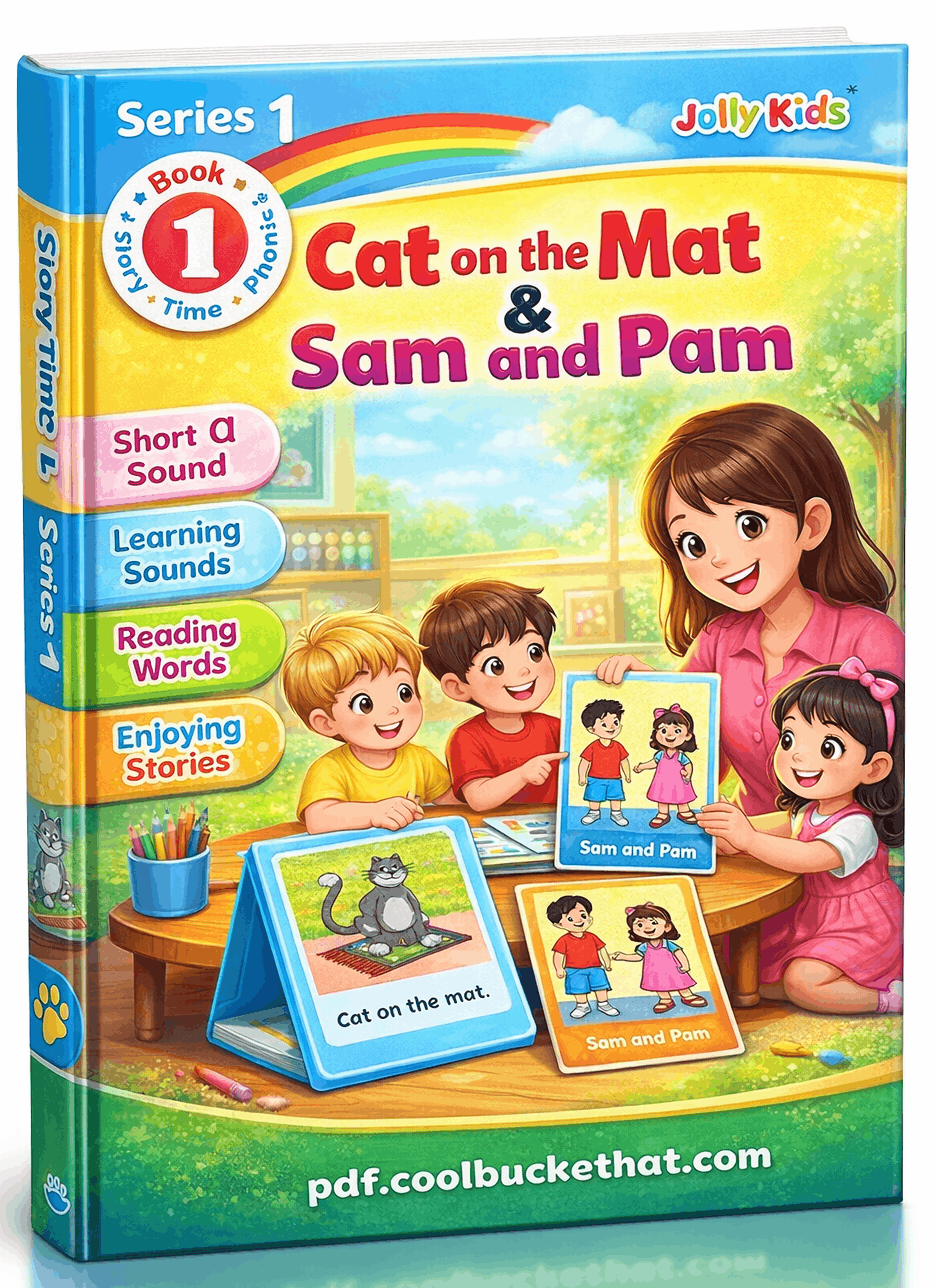
Jolly Kids Story Time Phonics Fun Learning Guide
Jolly Kids Story Time Phonics is a joyful and effective way to help children learn letter sounds, blending, and early reading skills. When phonics is taught through fun stories, children stay engaged and excited. As a result, they learn faster and remember better.
Phonics is the foundation of reading. However, teaching it through dry drills can feel boring. Story-based phonics makes learning active, creative, and meaningful. In this guide, you will discover how story time and phonics work together to build strong literacy skills.
What Is Phonics?
Phonics teaches children the relationship between letters and sounds. Instead of memorizing whole words, kids learn how to decode them.
For example:
A says /a/ as in apple
B says /b/ as in ball
C says /k/ as in cat
When children understand these sounds, they can blend them together:
C – A – T → Cat
D – O – G → Dog
This skill helps children read new words independently.
Why Story Time Makes Phonics Fun
Children love stories. Therefore, combining storytelling with phonics creates a powerful learning experience.
Story time helps children:
When phonics is part of a story, children connect sounds with meaning. This makes learning smoother and more enjoyable.
How Jolly Phonics Works in Story Time
In a Jolly Kids Story Time Phonics session, each letter sound is introduced through a short and fun story. The story highlights the sound repeatedly.
For example:
Letter S Story
“Sammy Snake slithers silently in the sand. He says sssss as he moves.”
Children repeat the sound ssss while acting like a snake. Movement and repetition strengthen memory.
This multi-sensory approach includes:
Listening
Speaking
Acting
Seeing pictures
As a result, children stay focused and active.
Teaching Letter Sounds Through Stories
Here are simple examples of phonics storytelling:
Letter A
“Amy Apple is angry. She says ‘a-a-a!’”
Children pretend to be angry and say the short “a” sound.
Letter T
“Tommy Tiger taps the table and says ‘t-t-t!’”
Kids tap gently while saying the sound.
Letter M
“Mommy Monkey munches mangoes and says ‘m-m-m.’”
Children pretend to eat and make the “m” sound.
These playful activities improve sound recognition quickly.
Blending Sounds During Story Time
After learning individual sounds, children can start blending.
Example:
Story sentence:
“The cat sat on the mat.”
Teacher asks:
What sound does C make?
What sound does A make?
What sound does T make?
Then children blend:
C – A – T → Cat
Blending practice helps children move from phonics to real reading.
Fun Activities for Phonics Story Time
To make Jolly Kids Story Time Phonics effective, add simple activities.
1. Sound Actions
Assign actions to each letter sound. For example:
Actions help children remember sounds better.
2. Sound Hunt Game
After the story, ask children to find objects in the room that start with the letter sound.
For letter B:
This activity builds word recognition.
3. Sound Matching Cards
Use picture cards and letter cards. Children match the picture to the correct starting sound.
Example:
Dog → D
Fish → F
Sun → S
Matching improves focus and memory.
Benefits of Story-Based Phonics
Story-based phonics offers many advantages.
Improves Reading Skills
Children learn to decode words naturally.
Builds Confidence
When kids can read simple words, they feel proud and motivated.
Strengthens Listening Skills
Story time improves concentration and comprehension.
Encourages Creativity
Stories develop imagination and language expression.
Sample Short Phonics Story
Here is a simple phonics story example:
“Ben the Bear likes big balloons. He blows blue balloons in the backyard. Ben says b-b-b every time he blows.”
After reading, ask:
This reinforces learning.
Daily Phonics Practice Plan
Short daily sessions are best for young children.
10–15 Minute Routine:
Review 3 letter sounds (3 minutes)
Read a short phonics story (5 minutes)
Practice blending simple words (4 minutes)
Play a quick sound game (3 minutes)
Consistency builds strong reading foundations.
Tips for Parents and Teachers
To make phonics learning successful:
Keep lessons short and fun.
Use expressive voices while reading.
Encourage children to repeat sounds loudly.
Praise effort and participation.
Repeat stories regularly.
Repetition strengthens memory and builds fluency.
Moving from Sounds to Sentences
Once children know several sounds, they can read simple sentences like:
The cat is big.
Sam has a hat.
The dog ran fast.
Reading short sentences builds early fluency.
Final Thoughts
Jolly Kids Story Time Phonics combines fun storytelling with structured sound learning. This method makes phonics enjoyable and effective. Children learn letter sounds, blending, and reading skills through play and imagination.
When phonics feels like a game, children stay motivated. With daily practice and joyful storytelling, young learners can develop strong reading foundations that last a lifetime.
Make learning lively. Make it playful. Most importantly, make it joyful.