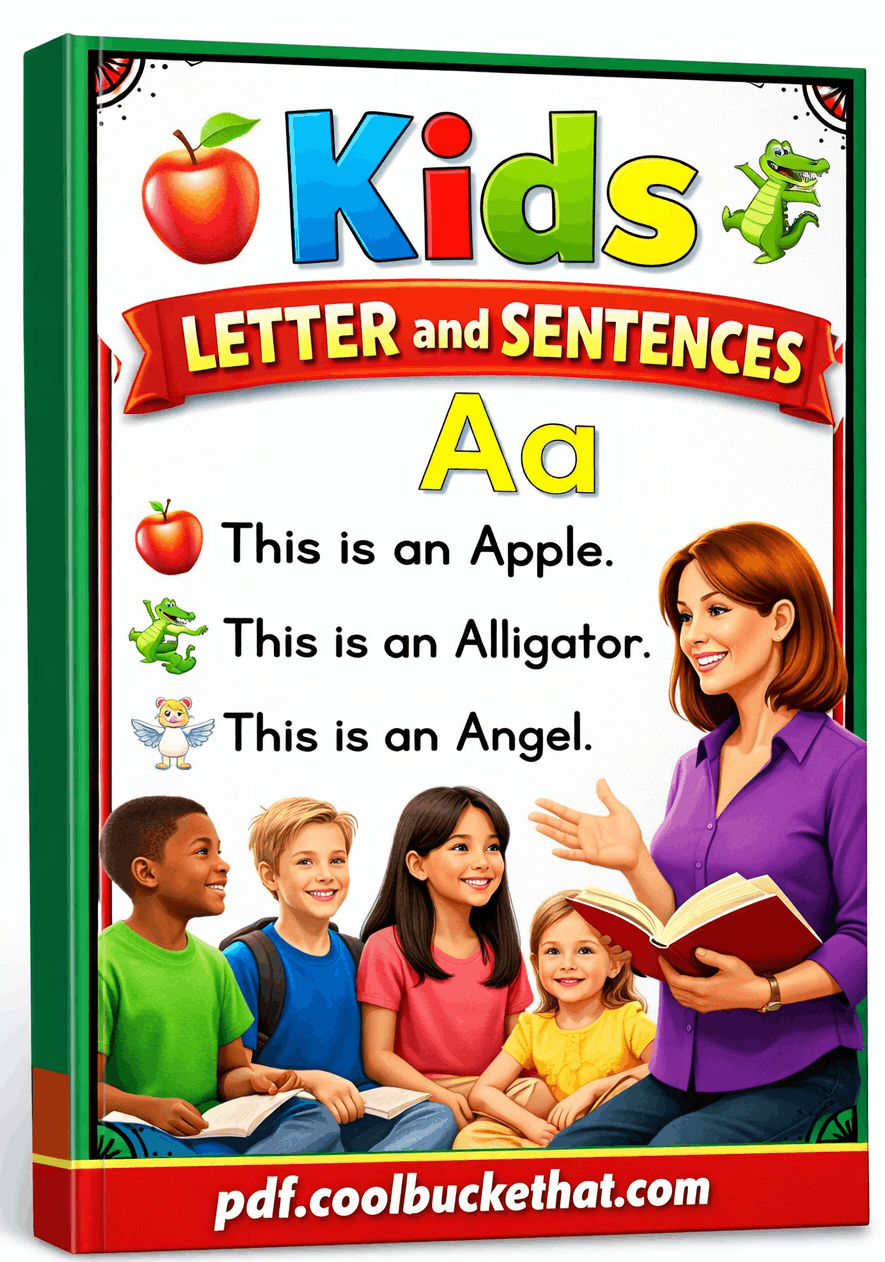
Kids Letter and Sentences Learning Made Easy
Kids Letter and Sentences learning is the first and most important step in a child’s English education. When children understand letters and begin forming simple sentences, they build a strong foundation for reading, writing, and speaking.
Teaching kids letters and sentences should be simple, fun, and interactive. Young learners respond better to short lessons, colorful examples, and repetition. In this guide, you will learn effective ways to teach letters, help children form sentences, and make learning enjoyable.
Why Learning Letters Is Important for Kids
Letters are the building blocks of language. Without understanding letters, children cannot read words or write sentences.
When kids learn letters, they develop:
Alphabet recognition
Sound awareness
Early reading skills
Writing confidence
First, children should recognize both uppercase and lowercase letters. Then, they should learn the sounds each letter makes. This process is called phonics.
For example:
A – /a/ as in apple
B – /b/ as in ball
C – /k/ as in cat
Learning sounds helps children read words faster and more accurately.
Fun Ways to Teach Letters to Kids
Children learn best through play. Instead of long explanations, use short and exciting activities.
1. Alphabet Songs
Songs make memorization easier. When children sing the alphabet song, they remember letter order naturally.
2. Flashcards
Colorful flashcards with pictures help connect letters to words.
Example:
Pictures make learning visual and fun.
3. Tracing Activities
Tracing letters improves handwriting skills. Start with large letters and slowly move to smaller ones.
4. Letter Games
You can ask:
These simple questions improve letter recognition quickly.
Moving from Letters to Words
Once children know letters and sounds, they can start blending letters into words.
Start with short three-letter words:
Teach children to sound out each letter slowly:
C – A – T → Cat
Blending sounds helps children read independently. Practice daily for better results.
Teaching Simple Sentences to Kids
After learning basic words, children can begin forming sentences. At first, sentences should be short and clear.
Examples of simple sentences:
I am happy.
This is a cat.
The sun is hot.
I like milk.
She has a doll.
Short sentences build confidence. Avoid long and complex grammar at the beginning.
Structure of a Basic Sentence for Kids
Children should understand three main parts of a sentence:
Subject (Who or what)
Verb (Action word)
Object (Extra information)
Example:
The boy runs.
Subject: The boy
Verb: runs
She eats rice.
Subject: She
Verb: eats
Object: rice
Teaching this structure slowly improves sentence-building skills.
Activities for Practicing Sentences
Practice is important for strong learning. Here are simple classroom or home activities:
1. Picture Description
Show a picture and ask:
What do you see?
What is the boy doing?
Children can say:
The boy is playing.
The dog is running.
This improves speaking skills.
2. Fill in the Blank
I see a ______.
The cat is ______.
Children complete the sentence with simple words.
3. Rearranging Words
Give mixed words:
Children arrange them:
This teaches sentence order.
Common Mistakes Kids Make
While learning letters and sentences, mistakes are normal. However, gentle correction is important.
Mixing Uppercase and Lowercase Letters
Children may confuse:
Regular practice helps fix this issue.
Missing Capital Letters
Teach kids that sentences begin with a capital letter.
Example:
❌ i like apples.
✔ I like apples.
Forgetting Periods
Explain that every sentence ends with a period.
Example:
Small grammar habits create strong writing skills later.
Daily Practice Plan for Kids
Short daily lessons work best. Children have limited attention spans.
Here is a simple 15-minute daily plan:
5 minutes: Review alphabet sounds
5 minutes: Practice reading simple words
5 minutes: Write or say 2–3 short sentences
Consistency is more important than long lessons.
Encouraging Kids to Enjoy Learning
Learning should never feel stressful. Encourage children with praise and positive feedback.
You can:
Celebrate small achievements
Use stickers or stars as rewards
Read simple storybooks together
Practice through drawing and coloring
When children feel confident, they learn faster.
Importance of Reading for Sentence Development
Reading simple books improves vocabulary and sentence structure.
Choose books with:
Large text
Simple sentences
Repeated words
Bright pictures
Repeated exposure to basic sentences helps children understand grammar naturally.
For example, repeated patterns like:
I see a dog.
I see a cat.
I see a bird.
This repetition builds strong language patterns.
Helping Kids Speak in Complete Sentences
Some children answer questions with one word. Encourage full sentences.
Instead of:
Teacher: What is this?
Child: Ball.
Encourage:
Speaking in full sentences improves communication skills.
Benefits of Learning Letters and Sentences Early
Early literacy skills bring many long-term advantages:
Better academic performance
Stronger reading comprehension
Clear communication skills
Improved confidence
Children who master letters and simple sentences early often become strong readers and writers later.
Final Thoughts
Teaching Kids Letter and Sentences should be simple, fun, and consistent. Start with letter recognition and sounds. Then move to short words and easy sentences. Use games, songs, pictures, and daily practice to keep learning exciting.
Remember, every child learns at a different pace. Be patient and supportive. With regular practice and positive encouragement, children will gradually build strong reading and writing skills.
Strong foundations in letters and sentences create lifelong learning success.