Phonics Sounds Chart for Early Reading Success
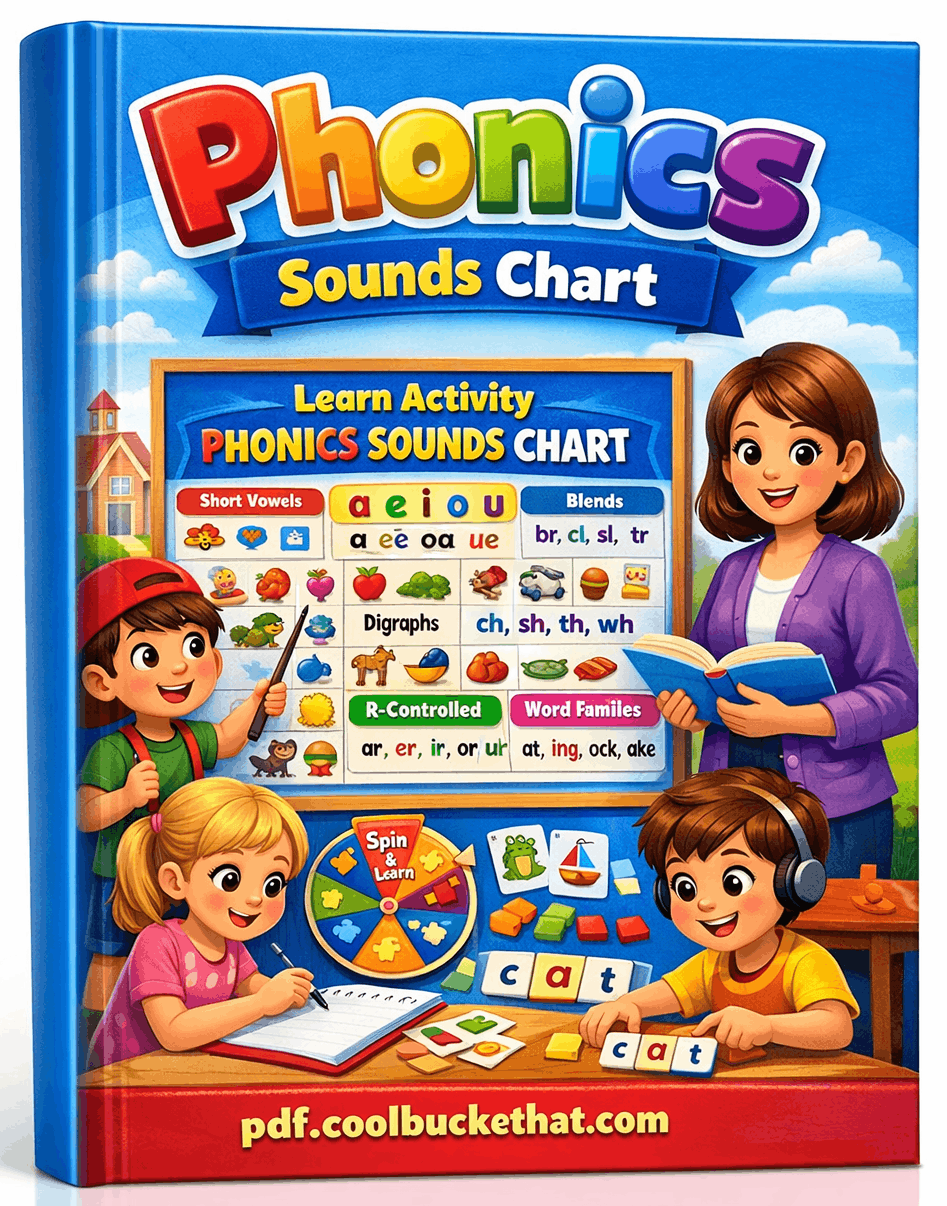
A Phonics Sounds Chart is one of the most helpful tools for teaching children how to read. It provides a clear and visual guide to letter sounds, blends, and common spelling patterns. When children can see and hear sounds regularly, recognition improves. As a result, decoding becomes easier and reading confidence grows.
Phonics charts are often used in classrooms and at home. They support daily practice and help children remember sounds quickly. In this guide, we will explore what a phonics sounds chart includes, how to use it effectively, and why it is important for early learners.
What Is a Phonics Sounds Chart?
A phonics sounds chart is a visual display of letters and the sounds they make. It usually includes:
Each sound is paired with an example word. This makes learning easier and more engaging.
For example:
A – apple (/a/)
B – ball (/b/)
C – cat (/c/)
Children look at the chart and say the sound aloud. Repetition strengthens memory.
Alphabet Letter Sounds
The first section of a phonics sounds chart focuses on individual letter sounds.
Consonant Sounds
B – /b/ (bat)
C – /c/ (cat)
D – /d/ (dog)
F – /f/ (fish)
G – /g/ (goat)
H – /h/ (hat)
J – /j/ (jam)
K – /k/ (kite)
L – /l/ (log)
M – /m/ (man)
N – /n/ (net)
P – /p/ (pen)
R – /r/ (rat)
S – /s/ (sun)
T – /t/ (top)
V – /v/ (van)
W – /w/ (web)
Y – /y/ (yak)
Z – /z/ (zoo)
Each letter makes a clear sound. These sounds are the foundation of reading.
Short Vowel Sounds
Short vowels are introduced early because they appear in simple CVC words.
A – /a/ (cat)
E – /e/ (bed)
I – /i/ (pig)
O – /o/ (dog)
U – /u/ (sun)
Children practice blending these vowels with consonants to form words.
Long Vowel Sounds
Long vowels say their name. These sounds are introduced after short vowels are mastered.
A – /ā/ (cake)
E – /ē/ (tree)
I – /ī/ (bike)
O – /ō/ (home)
U – /ū/ (cube)
Long vowel patterns such as silent e and vowel teams are often shown on advanced phonics charts.
Consonant Digraphs
Digraphs are two letters that make one sound.
SH – ship
CH – chat
TH – thin
WH – whale
PH – phone
These sounds should be practiced regularly. Visual examples help children remember them.
Consonant Blends
Blends are two or more consonants spoken together.
BL – black
CL – clap
ST – stop
TR – tree
GR – green
Unlike digraphs, each letter in a blend keeps its sound.
Why a Phonics Sounds Chart Is Important
A phonics chart supports structured learning. It provides a quick reference for students.
Benefits include:
Reinforces daily sound practice
Supports independent reading
Improves spelling accuracy
Builds phonemic awareness
Increases reading confidence
When children regularly refer to the chart, they rely less on guessing words.
How to Use a Phonics Chart Effectively
Simply hanging a chart on the wall is not enough. Active use is important.
Daily Sound Review
Point to each letter and say the sound together. Keep practice short and consistent.
Sound Hunt Activity
Ask children to find a word in a book that matches a sound on the chart.
Blending Practice
Choose three sounds from the chart and blend them into a word.
Interactive Questioning
Ask, “What sound does this letter make?” Encourage children to answer confidently.
Passive voice should be avoided during teaching. Clear and direct instructions improve understanding.
Using the Chart at Home
Parents can use a phonics sounds chart to support school learning.
Practice letter sounds for 10–15 minutes daily.
Review short vowels regularly.
Encourage reading simple CVC words.
Praise effort and progress.
Consistency leads to improvement. Small daily practice sessions are effective.
Common Challenges and Solutions
Some children may confuse similar sounds.
Confusing B and D
Use visual cues and repeated writing practice.
Mixing Short Vowel Sounds
Practice one vowel at a time.
Forgetting Digraph Sounds
Review digraphs separately with picture examples.
Patience and repetition help overcome these challenges.
Creating a Positive Learning Environment
A calm and organized space improves focus. Transition words like “first,” “next,” and “finally” help structure lessons clearly.
Encourage children to speak sounds aloud. Speaking reinforces memory.
Praise builds confidence. Confidence supports faster learning.
Final Thoughts
A Phonics Sounds Chart is a powerful tool for early literacy development. It provides a clear and structured way to learn letter sounds, blends, and vowel patterns. Through daily practice and active use, children can develop strong decoding skills.
When phonics instruction is consistent and engaging, reading becomes enjoyable. With patience and encouragement, young learners can build a strong foundation for lifelong reading success.