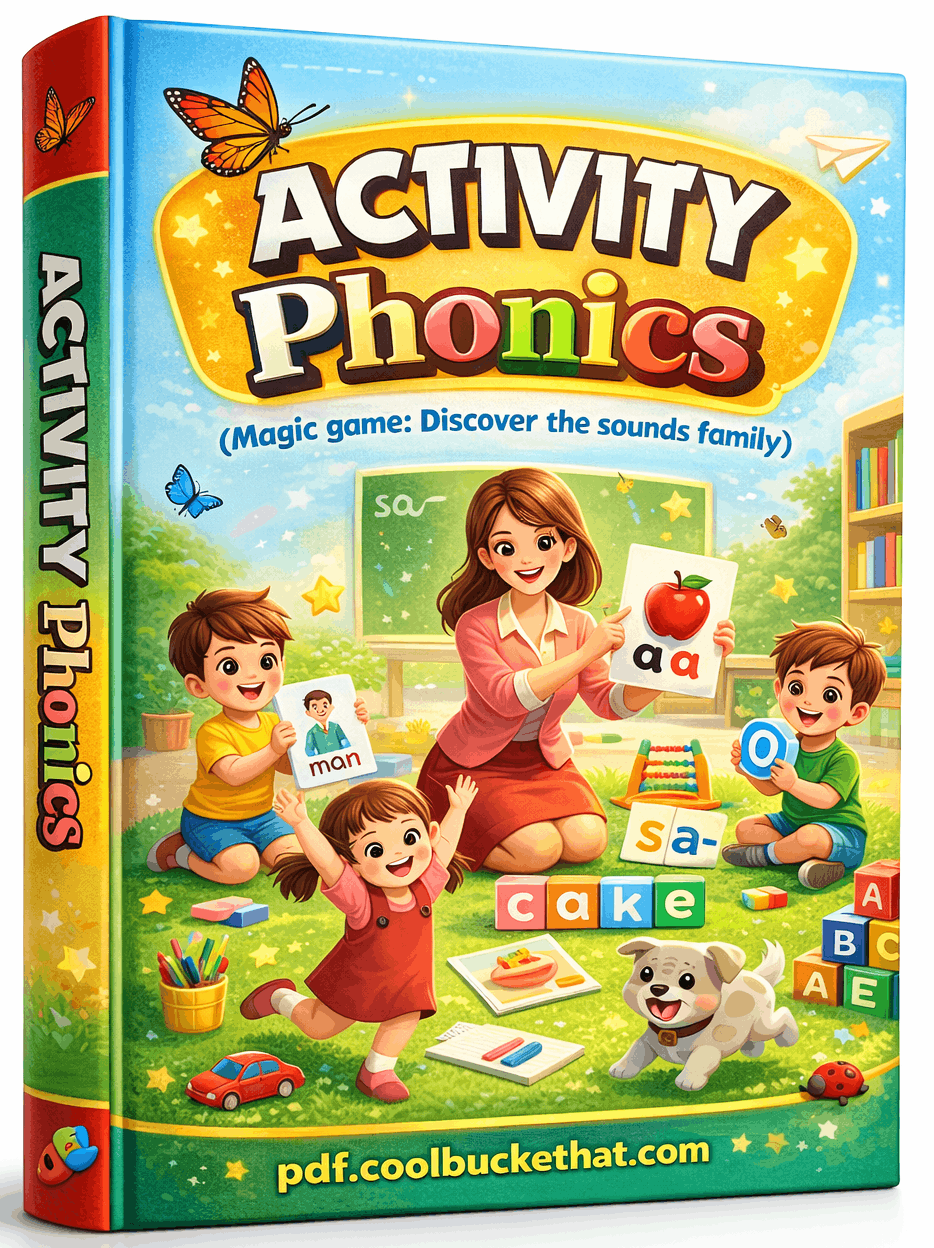
Activity Phonics (Magic Game Discover the Sounds Family)
Activity Phonics (Magic Game Discover the Sounds Family) is a creative and interactive way to help children learn phonics patterns. Young learners often enjoy games more than traditional worksheets. Therefore, turning phonics lessons into a “magic discovery game” makes learning exciting and memorable.
In this activity, children explore sound families such as -at, -an, -ig, and -op. They discover how changing one letter creates a new word. As a result, reading becomes easier and more fun.
This guide explains how to organize the magic phonics game, what skills it develops, and how parents and teachers can use it effectively.
What Is a Sounds Family?
A sounds family (also called a word family) is a group of words that share the same ending pattern.
For example:
-at family: cat, bat, hat, mat
-an family: man, pan, fan, can
-ig family: pig, wig, dig, big
When children recognize these patterns, they decode new words quickly. Instead of memorizing each word, they apply sound rules.
Why Use a Magic Phonics Game?
Children learn best when lessons feel playful. A magic-themed activity creates curiosity and excitement.
This phonics game helps children:
When learning feels magical, motivation grows naturally.
How to Set Up the Magic Game
The activity is simple to prepare. No expensive materials are required.
Materials Needed:
Flashcards with word endings (-at, -an, -ig, etc.)
Letter cards (b, c, d, f, h, m, p, r, etc.)
A “magic wand” (a simple stick or pencil works)
A small box or bag labeled “Magic Sounds Box”
Step-by-Step Instructions
Step 1: Introduce the Magic Ending
Place a word family card on the board, for example -at. Tell the children this is a “magic sound family.”
Explain that when a letter is added in front, a new word appears.
Step 2: Discover the Word
Pick a letter card, such as c. Place it before -at.
Blend slowly:
/c/ + /at/ = cat
Children say the word aloud.
Next, change the first letter to b.
/b/ + /at/ = bat
Continue discovering new words.
Step 3: Use the Magic Wand
Allow a child to use the “magic wand” to point at the letters. When the wand touches the word, everyone reads it together.
This adds excitement and encourages participation.
Step 4: Write and Read
After discovering several words, ask children to write them in their notebooks. Then they read them again aloud.
Repetition strengthens memory.
Example Sound Families to Practice
You can rotate different families each week.
Short A Families
-at: cat, bat, rat
-an: man, pan, fan
-ap: cap, map, tap
Short E Families
-en: pen, hen, ten
-et: pet, net, wet
Short I Families
-ig: pig, big, dig
-in: pin, bin, tin
Practice one family at a time to avoid confusion.
Extending the Activity
Once children master simple word families, you can expand the magic game.
Magic Sentence Building
Use discovered words in short sentences:
The cat is big.
The pig is in the mud.
This improves fluency.
Magic Sorting Game
Mix different word family cards. Ask children to sort words into correct families.
This strengthens pattern recognition.
Magic Reading Challenge
Create a short passage using one word family. Children read the passage aloud.
Example:
The cat sat on the mat.
The cat is fat.
The cat ran to the rat.
Short passages build reading stamina.
Benefits of This Phonics Activity
This activity supports multiple learning skills:
Listening skills improve during blending.
Speaking skills develop through repetition.
Writing skills strengthen when copying words.
Reading confidence grows with practice.
Passive voice should be avoided during teaching. Clear and active instructions work best.
Tips for Parents and Teachers
To make the activity successful:
Keep sessions short (15–20 minutes).
Praise participation.
Focus on one sound family per session.
Use bright and colorful materials.
Encourage group reading.
Consistency is key. Regular practice produces steady improvement.
Creating a Positive Learning Environment
Children should feel comfortable and encouraged. Mistakes are part of learning. Correction should be gentle.
Use transition words like “first,” “next,” and “finally” to guide the activity. Clear instructions improve understanding.
When children feel supported, they participate more actively.
Final Thoughts
Activity Phonics (Magic Game Discover the Sounds Family) turns phonics learning into an exciting adventure. Through playful discovery, children understand word patterns and improve blending skills.
This interactive method builds confidence and strengthens reading foundations. With regular practice and encouragement, young learners can master sound families and become independent readers.
In conclusion, phonics does not have to be boring. When learning feels magical, progress happens naturally and joyfully.