Beginning Reading CVC Words and Simple Stories
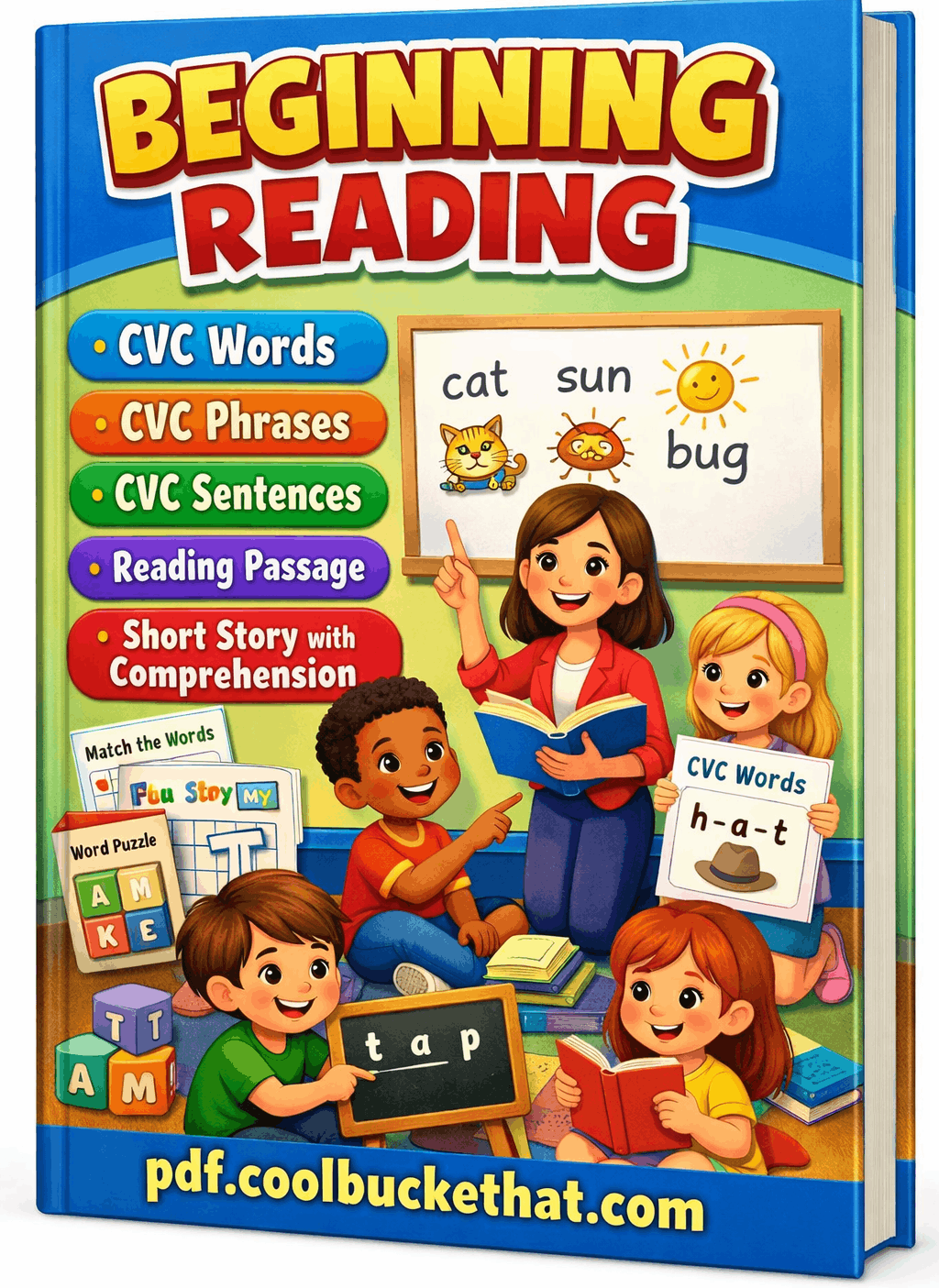
Beginning reading is an exciting stage for young learners. At this level, children start blending sounds and reading simple words independently. The focus is usually on CVC words, CVC phrases, CVC sentences, short reading passages, and simple stories with comprehension questions. These steps build confidence and fluency gradually.
CVC stands for Consonant-Vowel-Consonant. Words like cat, dog, and sun follow this pattern. Because each letter makes its own sound, children can decode them easily. In this guide, you will find structured examples to support early reading practice.
1. CVC Words Practice
CVC words are the foundation of early phonics learning. Each sound is pronounced clearly. Then the sounds are blended together.
Short A Words
Short E Words
Short I Words
Short O Words
Short U Words
Children should read these words aloud daily. Repetition strengthens decoding skills.
2. CVC Phrases Practice
Once children can read single words, short phrases should be introduced. Phrases help learners connect words smoothly.
a big cat
the red pen
a fat dog
a hot sun
a small bug
the big hat
a wet log
the sad pig
Reading phrases improves fluency. Children learn to move from word-by-word reading to smooth phrasing.
3. CVC Sentences Practice
Next, simple CVC sentences are introduced. Sentences should be short and clear.
Encourage children to point to each word while reading. This improves tracking and focus.
4. Short Reading Passage
After mastering sentences, learners can read short passages. These passages should contain mostly CVC words.
Reading Passage: The Big Cat
The cat is big.
The cat is fat.
The cat sat on the mat.
The cat ran to the dog.
The dog did not run.
The cat is a good pet.
This short passage helps children practice fluency and comprehension together.
5. Short Story with Comprehension
Stories make reading enjoyable. Even simple CVC-based stories can spark interest.
Short Story: The Red Hen
The hen is red.
The hen has a nest.
The hen sat on the nest.
A bug ran to the hen.
The hen did not run.
The hen got the bug.
The hen is glad.
This story uses simple CVC words and short sentences. The structure keeps reading manageable.
Comprehension Questions
After reading the story, ask simple questions:
What color is the hen?
Where did the hen sit?
What ran to the hen?
Did the hen run?
Is the hen glad?
These questions check understanding. Children should answer in short sentences when possible.
Teaching Tips for Beginning Readers
To support early reading success:
Practice daily for 10–15 minutes.
Start with single words before moving to sentences.
Use repetition to build confidence.
Encourage reading aloud.
Praise effort and progress.
Transition gradually from words to phrases, then sentences, and finally short stories. This step-by-step method reduces frustration.
Why This Structure Works
Beginning readers need simple and predictable patterns. CVC words provide that structure. Phrases improve fluency. Sentences build comprehension. Short passages strengthen reading stamina. Finally, stories create enjoyment and deeper understanding.
When reading feels achievable, children stay motivated. Confidence grows with each success.
Final Thoughts
Beginning Reading CVC Words, CVC Phrases, CVC Sentences, Reading Passages, and Short Stories with Comprehension form a complete early literacy pathway. Each step builds on the previous one.
With consistent practice and encouragement, young learners can move from reading simple words to understanding short stories independently. Strong foundations in CVC reading prepare children for more advanced phonics and fluent reading in the future.