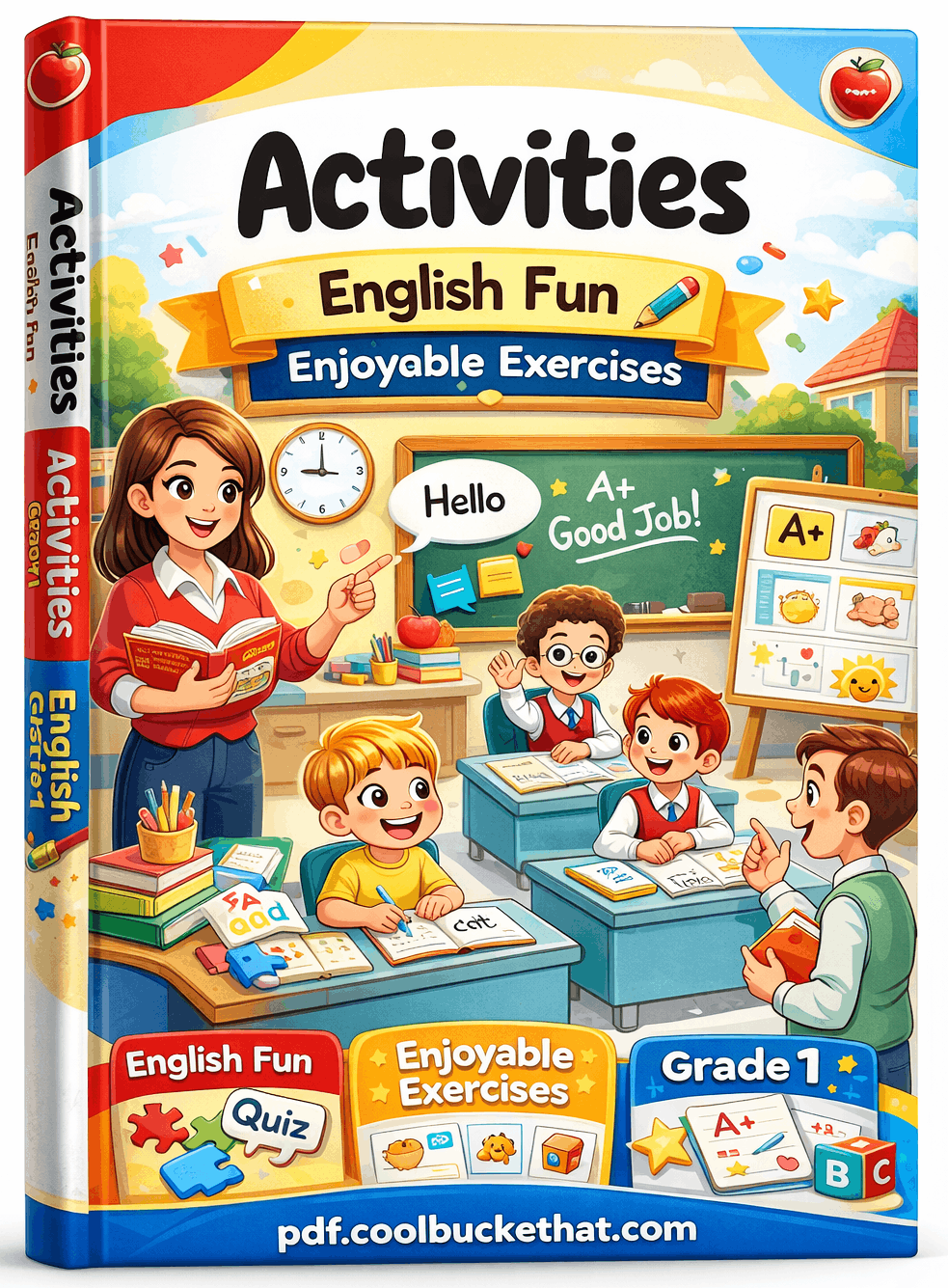
Activities English Fun Enjoyable Exercises for Grade 1
Activities English Fun Enjoyable Exercises for Grade 1 are essential for building strong language skills in young learners. At this early stage, children need lessons that are simple, interactive, and engaging. If learning feels like play, children stay motivated. As a result, they develop confidence in reading, writing, speaking, and listening.
Grade 1 is a critical year for English development. During this time, children strengthen phonics skills, build vocabulary, and begin writing simple sentences. Therefore, enjoyable activities should be included in daily lessons. In this guide, we will explore creative and effective exercises that make English learning fun and meaningful.
Why Fun English Activities Matter in Grade 1
Young children have short attention spans. Long lectures and difficult worksheets often lead to frustration. However, interactive exercises keep them focused.
Fun English activities help children:
When learning is enjoyable, participation increases. Moreover, positive experiences create a love for language that lasts for years.
Phonics Activities for Strong Reading Skills
Phonics forms the foundation of early reading. Grade 1 students should practice letter sounds and simple word patterns daily.
1. Letter Sound Bingo
Create bingo cards with letters or simple words. Call out a sound, and students mark the correct letter. This improves sound recognition.
2. CVC Word Matching
Provide picture cards and CVC words such as cat, dog, and sun. Students match the word to the correct image.
3. Sound Sorting
Ask students to sort pictures based on beginning sounds. For example, group words that start with /b/.
These activities strengthen decoding skills while keeping children engaged.
Vocabulary Building Games
Expanding vocabulary is important in Grade 1. However, new words should be introduced gradually.
Picture and Word Match
Show a picture of a tree, ball, or house. Ask students to choose the correct word. This connects visual learning with reading.
Word of the Day
Introduce one new word daily. Use it in a simple sentence. Encourage students to repeat and use the word.
Flashcard Fun
Use colorful flashcards for quick review. Short and repeated practice improves retention.
Vocabulary games should remain simple and interactive. Clear explanations are recommended.
Sentence Formation Exercises
Grade 1 students begin forming simple sentences. Structured practice builds confidence.
Rearrange the Words
Provide jumbled words like:
“is / cat / The / big.”
Students arrange them correctly: “The cat is big.”
Fill in the Blank
“The dog is ___.”
Students add simple adjectives like big, fast, or small.
Capital Letter and Full Stop Practice
Teach children to begin sentences with capital letters and end with a period. Repetition reinforces this rule.
Sentence exercises should be short. Clear instructions help children understand quickly.
Reading Activities for Fluency
Reading fluency develops through regular practice. Short passages work best for Grade 1 learners.
Read and Draw
Students read a simple sentence and draw a picture. This checks comprehension.
Echo Reading
The teacher reads a sentence aloud. Students repeat it. This improves pronunciation and expression.
Partner Reading
Pair students to read short stories together. This builds confidence and teamwork.
When fluency improves, comprehension naturally increases.
Writing Practice Made Fun
Writing should feel creative, not stressful. Short writing exercises encourage expression.
My Favorite Animal
Ask students to write two or three simple sentences about their favorite animal.
Complete the Story
Start a sentence like:
“I saw a big dog…”
Students continue with one more sentence.
Daily Journal Time
Encourage children to write about their day in simple sentences.
Writing activities should be guided. Positive feedback builds motivation.
Listening and Speaking Activities
Language development includes listening and speaking skills. These areas should not be ignored.
Show and Tell
Students bring an item from home and describe it using simple sentences.
Listen and Follow
Give simple instructions like:
“Touch your head.”
“Clap your hands.”
This strengthens listening comprehension.
Question Time
Ask simple questions:
“What is your favorite color?”
Encourage full-sentence answers.
Interactive speaking activities increase confidence.
Group Activities for Classroom Engagement
Group exercises encourage teamwork and communication.
Word Building Race
Divide students into small groups. Provide letter cards. The first group to build a word wins.
Story Circle
Each student adds one sentence to create a group story.
Role Play
Act out simple scenes like shopping or visiting the zoo.
These activities make English lessons lively and memorable.
Using Visual and Hands-On Materials
Young learners respond well to visual aids. Colorful charts, flashcards, and worksheets improve engagement.
Hands-on materials such as letter tiles help children build words physically. This method strengthens spelling skills.
Digital tools can also be used. However, screen time should be balanced with written practice.
Supporting English Learning at Home
Parents play a key role in reinforcing lessons.
Here are simple tips:
Read bedtime stories daily.
Practice new words regularly.
Encourage short conversations in English.
Praise effort and improvement.
Short daily practice sessions are effective. Consistency matters more than long study hours.
Common Challenges and Solutions
Some Grade 1 students may struggle at first. However, most challenges can be solved with patience.
Short Attention Span
Keep activities brief and varied.
Difficulty Reading
Practice phonics daily. Repetition builds fluency.
Lack of Confidence
Provide encouragement. Celebrate small achievements.
Positive reinforcement creates a supportive learning environment.
Creating a Positive Learning Environment
A calm and organized classroom improves focus. Clear rules should be explained first. Transition words like “first,” “next,” and “finally” help guide activities.
Instructions should be short and direct. Passive voice should be limited to maintain clarity. Consecutive sentences should flow smoothly.
When students feel safe and supported, participation increases naturally.
Long-Term Benefits of Fun English Exercises
Fun and structured English activities provide long-term benefits:
Improved academic performance
Strong communication skills
Greater confidence in speaking
Love for reading and writing
Children who enjoy learning are more likely to stay motivated. This positive attitude supports lifelong learning.
Final Thoughts
Activities English Fun Enjoyable Exercises for Grade 1 create a strong foundation for language success. Through phonics games, vocabulary practice, reading tasks, and creative writing, children develop essential English skills.
Learning should always feel engaging and achievable. Short, structured exercises deliver the best results. With consistent practice and encouragement, Grade 1 students can build confidence and enjoy their English journey.
In conclusion, when education is fun and interactive, progress happens naturally. By combining creativity with structure, teachers and parents can help young learners succeed in English with joy and confidence.