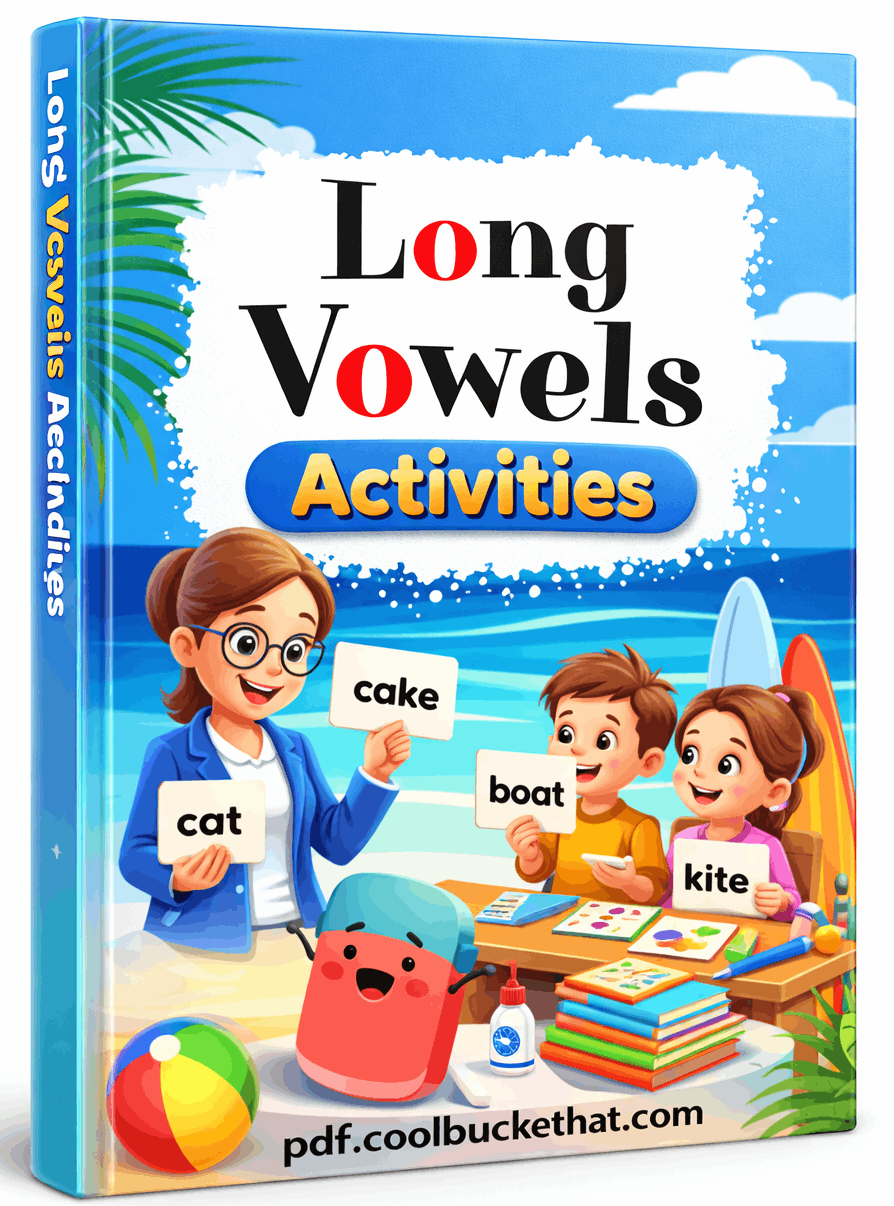
Long Vowels Activities for Fun Phonics Practice
Long Vowels Activities are essential tools for helping children strengthen their reading and pronunciation skills. After mastering short vowel sounds, young learners are ready to explore long vowels. At this stage, phonics instruction becomes more exciting and slightly more advanced. However, learning must still feel simple and enjoyable.
Parents and teachers often search for effective ways to teach long vowel patterns without overwhelming children. The good news is that structured and engaging activities can make the process smooth. In this guide, we will explore why long vowels matter, how to teach them, and which activities work best for early readers.
What Are Long Vowel Sounds?
Long vowel sounds occur when a vowel says its name. For example:
A in “cake”
E in “tree”
I in “bike”
O in “home”
U in “cube”
These sounds differ from short vowels. For instance, the “a” in “cat” is short, while the “a” in “cake” is long. Understanding this difference is important because it changes the meaning of words.
Children must learn to recognize patterns such as:
Silent e (cake, bike)
Vowel teams (rain, boat)
Open syllables (he, go)
When these patterns are introduced gradually, confusion is reduced. Therefore, structured phonics instruction is recommended.
Why Long Vowel Practice Is Important
Long vowels appear frequently in everyday reading. As children move beyond beginner books, they encounter more complex words. If long vowel sounds are not understood clearly, reading fluency may suffer.
Here are key reasons why practice is necessary:
1. Improves Reading Accuracy
Long vowel patterns help children decode longer words correctly. When patterns are recognized, guessing is reduced.
2. Strengthens Spelling Skills
Spelling becomes easier when children understand vowel teams and silent letters.
3. Builds Reading Confidence
When children read smoothly, they feel proud. Confidence encourages them to read more often.
Because of these benefits, consistent phonics reinforcement should be provided at home and in the classroom.
Effective Types of Long Vowel Activities
A variety of activities can be used to teach long vowels in a fun and structured way. Lessons should remain interactive. Short sessions work best.
1. Word Sorting Games
Word sorting is simple but powerful. Children are given a list of words and asked to group them based on vowel patterns.
For example:
Magic e words: cake, game, ride
Vowel teams: rain, boat, seed
Sorting helps children notice spelling patterns. As a result, visual recognition improves.
2. Matching Activities
Picture-to-word matching strengthens understanding. Children read a word and connect it to the correct image. This method supports both decoding and comprehension.
3. Fill-in-the-Blank Exercises
Children complete sentences using the correct long vowel word. For example:
“The goat is on the ___.” (boat)
This practice reinforces meaning along with spelling.
4. Reading Short Stories
Short passages that focus on long vowels can be introduced. Repetition of similar patterns improves fluency.
These methods can be rotated to maintain engagement.
Making Learning Interactive and Fun
Young learners respond well to creative learning methods. Therefore, Long Vowels Activities should include hands-on and playful elements.
Use Flashcards
Flashcards can be used for quick practice. One side shows a picture. The other shows the word. Children guess the word before flipping the card.
Play Phonics Bingo
Create bingo cards with long vowel words. Call out words and ask children to mark the correct ones. This game encourages active listening.
Try Word Building
Provide letter tiles or magnetic letters. Ask children to build words like “cake” or “train.” This improves spelling awareness.
When learning feels like play, motivation increases naturally.
Teaching Long Vowel Patterns Step by Step
Introducing all long vowel rules at once can overwhelm children. Instead, patterns should be taught gradually.
Step 1: Silent E (Magic E)
Start with simple CVC words such as “cap.” Then add silent e to form “cape.” Explain how the silent e changes the vowel sound.
Step 2: Vowel Teams
Next, introduce vowel pairs like “ai,” “ea,” and “oa.” Show examples and practice blending sounds.
Step 3: Open Syllables
Teach that vowels at the end of syllables often say their name. Examples include “he” and “go.”
Clear examples should be provided. Passive voice should be limited in explanations. Direct instructions are easier for children to follow.
Classroom Strategies for Teachers
Teachers can include long vowel lessons in daily literacy blocks. Short and structured sessions are ideal.
Small Group Instruction
Group students based on skill level. Provide targeted worksheets and reading passages.
Literacy Centers
Place phonics games and worksheets in learning stations. Students rotate through centers. This method keeps lessons dynamic.
Quick Assessments
Short quizzes or reading checks can be used to monitor progress. Immediate feedback helps correct errors early.
Because reading skills develop at different rates, flexible teaching methods should be applied.
Supporting Learning at Home
Parents play a key role in reinforcing phonics skills. Fortunately, long vowel practice can be done without expensive materials.
Here are simple tips:
Read bedtime stories that highlight long vowel words.
Ask your child to find long vowel words in books.
Create a weekly word list for review.
Practice spelling using short daily exercises.
Consistency is more important than long study sessions. Even 15 minutes per day can lead to noticeable improvement.
Common Challenges and Solutions
Some children may struggle with certain vowel patterns. However, challenges can be addressed with patience.
Confusion Between Vowel Teams
Children may mix up “ai” and “ea.” To solve this, practice word families separately before combining them.
Forgetting Silent E Rule
Repeated demonstration helps. Show before-and-after word examples like “kit” and “kite.”
Slow Reading Speed
Encourage repeated reading of short passages. Fluency improves with practice.
Mistakes should be corrected gently. Encouragement builds resilience.
Digital and Printable Resources
Both digital and printable Long Vowels Activities are widely available. Each option offers benefits.
Printable worksheets improve handwriting and reduce screen time. Digital games provide interactive feedback and animations.
A balanced approach often works best. Printed worksheets can be used for structured practice. Digital tools can be added for variety.
Long-Term Benefits of Mastering Long Vowels
When children master long vowel sounds, reading becomes smoother. Longer words feel less intimidating. Vocabulary expands naturally.
Strong phonics skills also improve writing. Children spell words correctly with greater confidence. As a result, academic performance improves in multiple subjects.
Moreover, reading enjoyment increases. When children can decode words easily, they focus more on story meaning rather than struggling with pronunciation.
Creating a Positive Learning Environment
Learning success depends on environment as well as instruction. A calm and supportive space encourages participation.
Praise effort consistently. Celebrate improvement, even if progress seems small. Provide clear instructions. Keep explanations simple and direct.
Transition words such as “first,” “next,” and “finally” can be used while teaching steps. This helps children follow instructions clearly.
Above all, patience is essential. Reading skills develop gradually.
Final Thoughts
Long Vowels Activities provide an essential bridge between beginner phonics and fluent reading. They help children recognize spelling patterns, decode words accurately, and build confidence.
By introducing long vowel rules step by step, learning becomes manageable. Interactive games, matching exercises, and short reading passages keep students engaged. Both parents and teachers can support progress through consistent practice.
In conclusion, long vowel instruction does not need to feel complicated. With structured lessons and creative activities, children can master these sounds successfully. Over time, strong phonics skills will support lifelong reading growth and academic achievement.