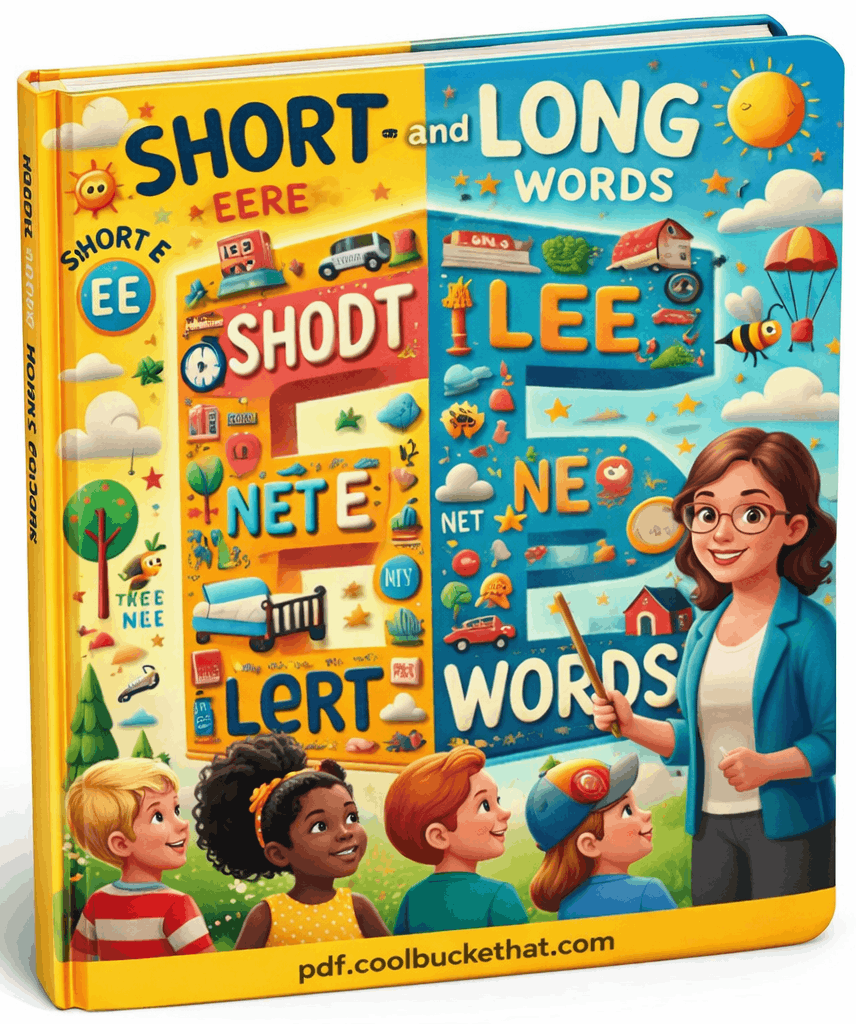
Short and Long Words: Easy Guide for Young Learners
Short and Long Words are an important part of early reading development. When children begin learning to read, they first recognize small and simple words. Gradually, they move to longer and more complex words. Understanding the difference between short and long words helps improve pronunciation, spelling, and reading fluency.
In this guide, you will learn what short and long words are, why they matter, and how to teach them in simple and effective ways.
What Are Short Words?
Short words usually have fewer letters and simple sound patterns. Many short words follow the CVC pattern (consonant-vowel-consonant).
Examples of Short Words:
These words are easier for beginners because they can be sounded out clearly.
For example:
c-a-t → cat
d-o-g → dog
Short words help children build confidence in reading.
What Are Long Words?
Long words have more letters and sometimes more than one syllable. They may include blends, digraphs, or long vowel sounds.
Examples of Long Words:
basket
teacher
computer
sunshine
playground
elephant
Long words require stronger decoding skills. They may need to be broken into smaller parts.
For example:
sun-shine
bas-ket
Breaking long words into syllables makes them easier to read.
Why Learning Short and Long Words Is Important
Understanding short and long words helps children:
Children usually start with short words. As they improve, they move to longer ones.
Teaching Short Words First
It is best to begin with simple short words. These words build a strong phonics foundation.
Step 1: Teach Letter Sounds
Children must know individual letter sounds before blending.
Step 2: Blend Sounds Together
For example:
h-a-t → hat
p-e-n → pen
Step 3: Practice with Sentences
The cat is big.
The dog can run.
Simple sentences reinforce learning.
Moving to Long Words
Once children are comfortable with short words, introduce longer words gradually.
Break Words into Syllables
For example:
Clapping syllables helps children hear word parts clearly.
Identify Word Patterns
Some long words include familiar short words.
Example:
sunshine = sun + shine
Recognizing smaller parts makes reading easier.
Activities for Practicing Short and Long Words
Learning becomes more effective with interactive activities.
1. Sorting Game
Write short and long words on cards. Ask children to sort them into two groups.
2. Word Building
Start with a short word and add letters.
cat → catch
sun → sunny
3. Clap the Syllables
Clap once for short words. Clap twice or more for longer words.
dog (1 clap)
bas-ket (2 claps)
4. Reading Practice
Mix short and long words in short paragraphs.
Example:
The cat ran to the playground.
The playground is big.
This builds fluency gradually.
Common Challenges
Difficulty With Long Words
Children may feel overwhelmed by longer words. Break them into smaller parts and practice slowly.
Mixing Sounds
Encourage clear pronunciation. Practice blending and syllable division regularly.
Losing Confidence
Praise effort, not perfection. Progress takes time.
How Short and Long Words Improve Vocabulary
Short words build basic communication. Long words expand expression.
For example:
Short word: big
Long word: beautiful
As vocabulary grows, communication becomes richer and clearer.
Classroom Tips
Teachers can use structured activities such as:
Word walls with short and long words
Partner reading sessions
Syllable counting exercises
Sentence building practice
Short daily practice sessions lead to steady improvement.
Final Thoughts
Short and Long Words are essential steps in reading development. Children begin with small, simple words and gradually move toward longer and more complex ones. This progression builds strong literacy skills.
Start with short words. Practice regularly. Introduce long words slowly.
With patience and consistency, young learners become confident readers—one word at a time.